Soundtrack: Diana Quandour
الغربة
“Hopeless Romantic” , “Black Widow” , “If you were a man the world would be in danger” … These are some of the nicer things that have been said about me. I could blame my father’s absence for my relentless pursuit for romance, but Freudian notions are overkill and stoicism renders everything tasteless, a philosophy for those who lack agency and control over certain aspects of their lives and think that to be of importance. I’ll instead blame an Algerian singer by the name of Warda.
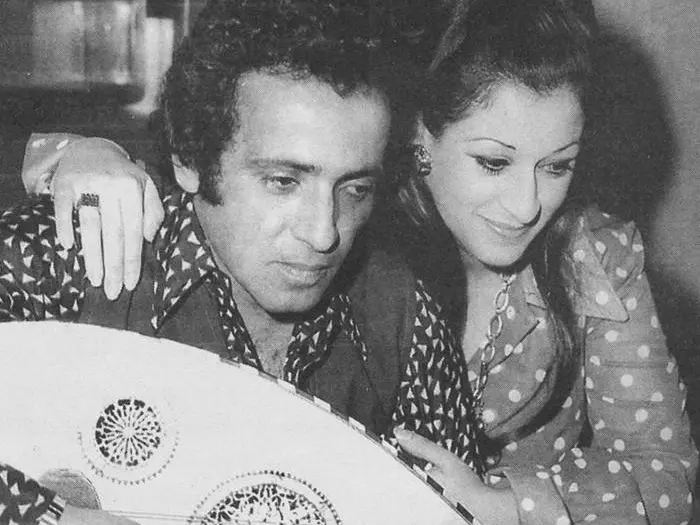
This all began in the womb, according to my mother. Pregnant with me upon the recent release of Batwannes Beek (بتونس بيك) by Warda in 1992 she would listen to it religiously throughout her term. This was the first song I ever heard, allegedly. Warda discovered the compositions of renowned Egyptian composer Baligh Hamdi when attending a cinema in France, insisting on meeting him, and that they did, which ended in the two eventually eloping. It speaks of the comfort one feels in the “good company” (wanas, الونس) of their lover as well as longing and obsession, where the world in all its crowds feels empty without the beloved. The repetition of lyrics affirms the notion of the song. Despite divorce, their unbreakable bond remained until the death of Baligh Hamdi, who wrote her Bawadaak (I Promise You, بوعدك) before his death at the age of 62 after battling an unpromising diagnosis of liver disease. “Batwannes Beek” may very well have set the tone for my entire life, both a blessing and curse.
That being the case, I never truly delved into the lyricism of the Arab Renaissance before to moving to California, where I was struck with such a revolting feeling towards life abroad that the only possible remedy at the time was music. I desperately needed something to quell the weighted feeling of homesickness. It was in this audible realm that I found solace. The term in Arabic is known as “Al-Ghurba” (الغربة), a notion that describes the feeling of displacement in a foreign land
Another song that I grew up listening to and later came to appreciate was Qareat al Fengan/The Fortune Teller (قارئة الفنجان) by Abdel Halim Hafez. It will forever hold a solid place as one of my favorite songs of all time; a legendary Arabic masterpiece written by the renowned Syrian poet Nizar Qabbani, whose writings have been interpreted into song by a span of Arab artists. Fortune telling back home is traditionally done by reading the grounds in a coffee cup after the drinker has finished it and flipped it upside down on a dish, later to be interpreted after the grains have settled to form an image. The story is of a man who visits a fortune teller that is so mystified by the pattern his cup depicts that she proclaims he will “fall in love with a traveling woman whose hair extends to all corners of the earth, and will experience a sadness by the likes of which I’ve never seen in anyone’s coffee cup”. It snakes seamlessly through various transitions, a complex journey that includes elements of cartoon-like sound effects, classical arab orchestra, and even surf rock, executed by the guitarist Omar Khorshid. At 3:15 it feels like you’re a drunk sailor on a boat. I love it. A smack on the gab from start to finish.
Deep in the marrow of my bones is “Zahret al Mada’en” (زهرة المداءن) by Fairuz. An ode to Jerusalem. This song was the favorite of my maternal grandfather. He was a member of the communist party in Jordan in his youth and was exiled to Tito’s Yugoslavia, later returning to the country under the guise of a different last name. I wasn’t perfectly fatherless because he took that responsibility upon himself for me and my siblings as long as his body allowed, god bless his soul.
Ya Rayeh (يا رايح) by Dahmaneh Al Harrachi is an Algerian song, which I find to be especially interesting because it’s played on a banjo, which is an Appalachian folk instrument that originates from West Africa but is not known to be heard in the “arabesque”. It reminds me of attending weddings as a young girl, where a cover done by Rachid Taha was a staple. I vividly recall running around the legs of the adult attendees with my cousins as they sang and danced to this song in unison. In my adulthood I happened upon the original by Harrachi, which I very much prefer.
This is a playlist/compilation of only a few of many that have carried me throughout moments of Ghurba, in loving and heartache. I pray they do the same for you, should you need them, but don’t feel too sorry for yourself… all tolerance stems from understanding as a byproduct of experience.
To love deeply is an act of honor.
words: Diana Quandour@dquandour