Static movement: Moa Mandu
Looking for the Bosnian dancer
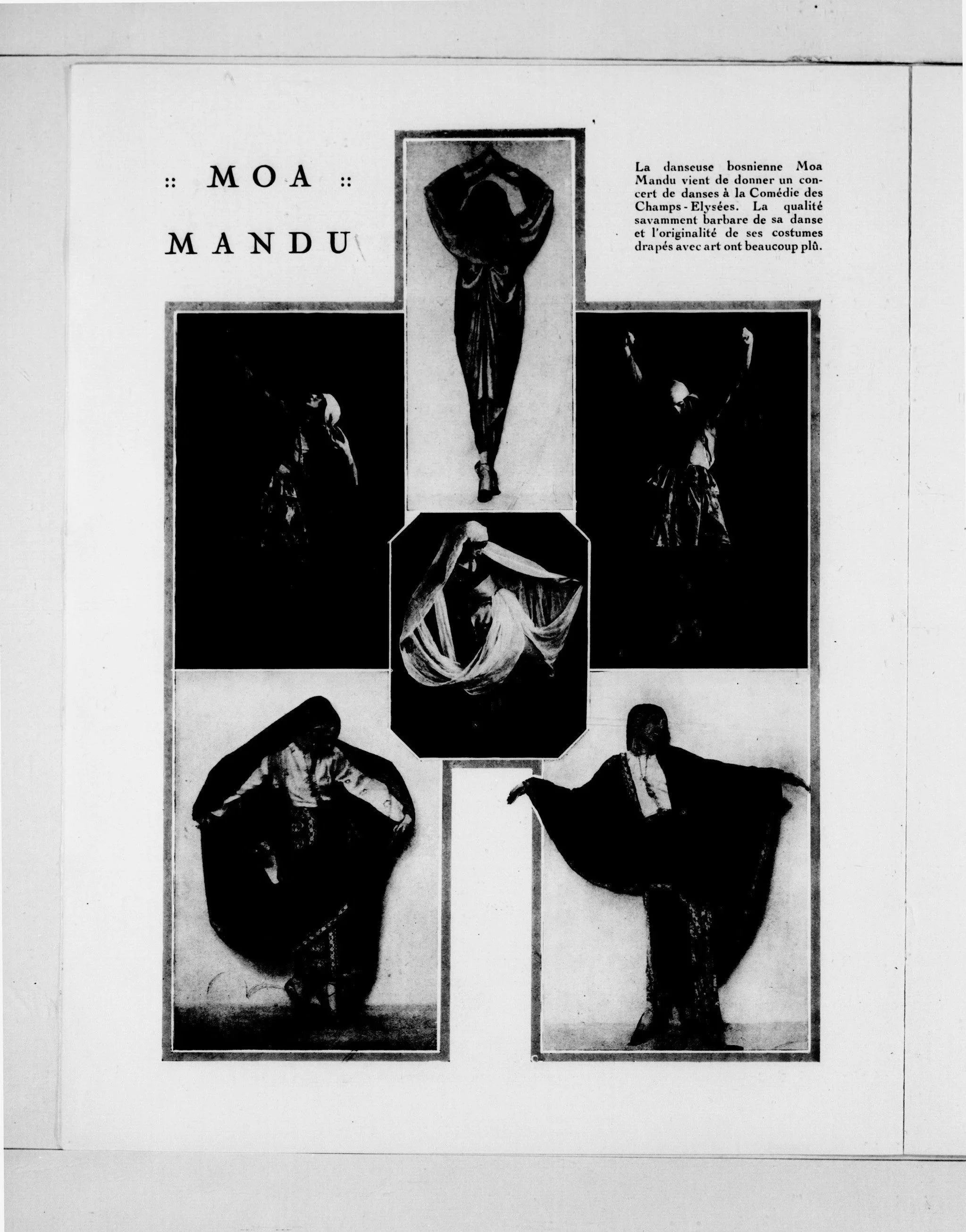
“Moa Mandu tire un parti supérieur de la science du drapé. Tantôt vêtue d’une robe blanche aux plis monastiques elle semble une vivante statue de marbre, tantôt d’une sorte de long manteau dont les plis ont des luisances d’acier elle semble on ne sait quelle fée sous-marine.”
Jean-Gabriel Lemoine, La Danse à Travers le Monde. 20 Octobre 1922.
These words are all it took to draw me in. Lemoine speaks of Bosnian dancer Moa Mandu in mythical terms that render her almost palpable to me. He mentions the science of draping, one I’ve been trying to - but never quite managed to - master my whole life. A science that means I’ve had to remain static and poised, never a movement out of place or I might just lose my draping. He compares her to an animated marble statue when dressed in white, and evokes an underwater fairy when the folds of her long coat make it seem like she’s basking in steel. A dancer writhed and squiggled and remained static. Moa Mandu begins to move again.
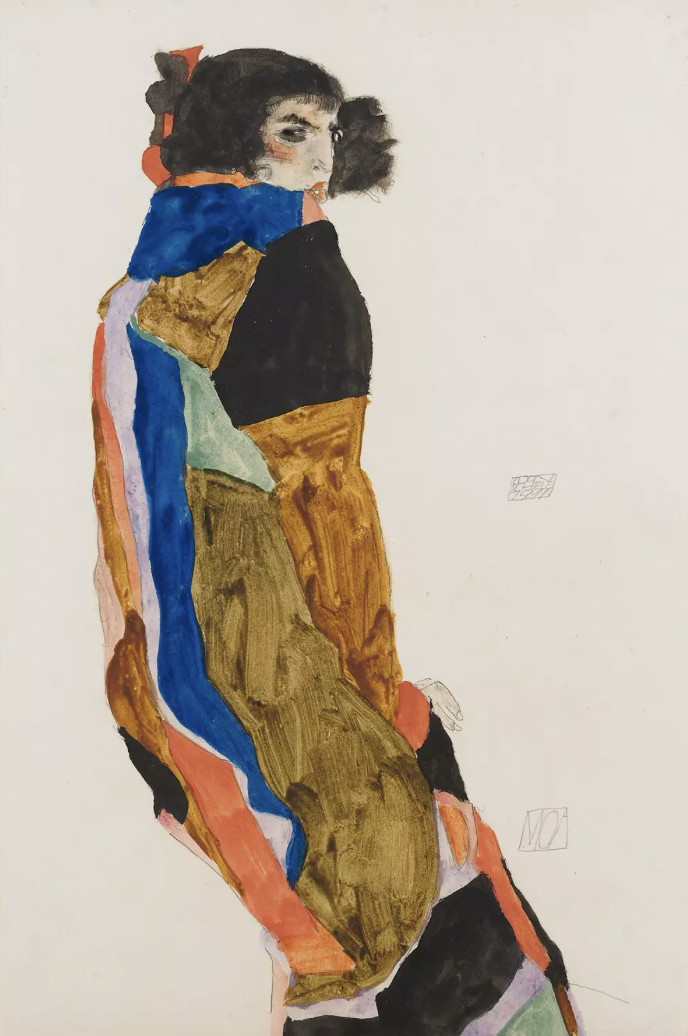
A quick search for Moa Mandu takes me to Moa by Egon Schiele. Descriptions all contain tiny crumbs of small variations of information: “Moa Mandu was the model for the painting ‘Moa’ by the Austrian painter Egon Schiele” ; and Schiele captured the stylish dancer Moa Mandu, wife of famous mime Erwin Osen, in his 1911 painting ‘Moa” ; or even, the most terrifying one yet: According to contemporary witnesses, the dancer Moa Mandu, about whom not many specifics are known except for her Bosnian origins, came in contact with Egon Schiele (1890—1918) through Erwin Osen (1891—1970). But he wrote her name in big. She must have felt so big. Where did she buy that coat?
Specifics outside of the men she was surrounded by are unknown, and the intoxicating words comparing her to a marble statue or underwater fairy aren’t immediately available to whoever wants to search for her. Yet this was a dancer who mastered the science of draping and statues whilst moving/whilst being a muse?
A tale as old as time, a woman’s grandeur eclipsed by a man’s cannibalism and appropriation of her light.
André Levinson writes a scathing review of a performance in La Danse au Théâtre : Esthétique et Actualité Mêlées (1924.) He qualifies her dancing as soulless, useless and mocks the fact that she throws herself to the ground at the end of each performance. This might be my favourite fact yet. Now I want to do the same at the end of each of me sentences.
A 1954, New York Times article, Why the Moa’s As Dead as a Dodo upsets you. It can’t be, it just can’t. It isn’t.
I start thinking of the elements. An alchemical understanding might offer the only explanation for the sudden combustion happening inside of me. Steel: a material that has razor-sharp edges and never shatters. Marble as the Prima Materia: an unrefined material patiently waiting for the alchemist’s hand to release its flash. Had an alchemist, years after the cannibalism, managed to release her flash, her unbreakable sharp edges? (or, rather, had anyone written about her?)
She was briefly released from ignorance in 2016 for the historical drama Egon Schiele: Death and the Maiden, portrayed by Larissa Breidbach. [What a gift to be able to say she was draped in Mandu.] We’re told she was Tahitian, and her then partner alludes to purchasing her (?) She’s portrayed as being naughty, nasty. Again, she’s a footnote, a side story.
In 2019, Shobana Jeyasingh directed Staging Schiele. The choreographer speaks of the fame of his sexually intrusive gaze, so she staged paintings that demonstrate the fact that his muses seemed to have agency (?) It centres Schiele and three women in his life: his mother, his lover and his wife. The entire performance looks magnificent, but my heart hurts: no Moa Mandu. An article by Miriam Al Jamil speaks of Jeyasingh’s project and mentions the dancer and her husband, famous Viennese mime Erwin Osen (and close friend of Egon’s,) as being catalysts for a lot of the movement in his paintings. His connection with her dancing and his movement therefore made the entire performance make sense. I still don’t see Moa in it.
Then I found the collection of photos.
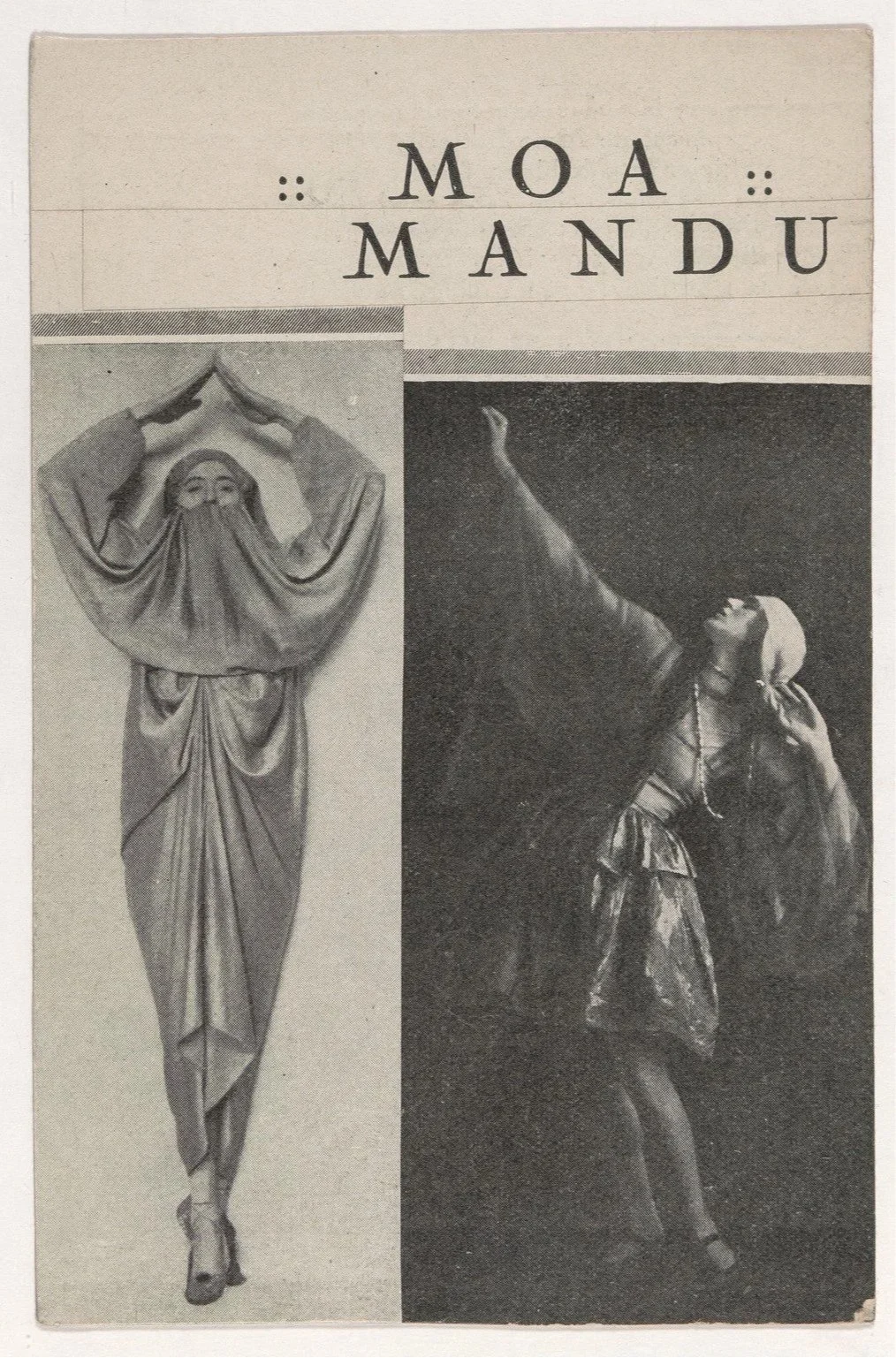
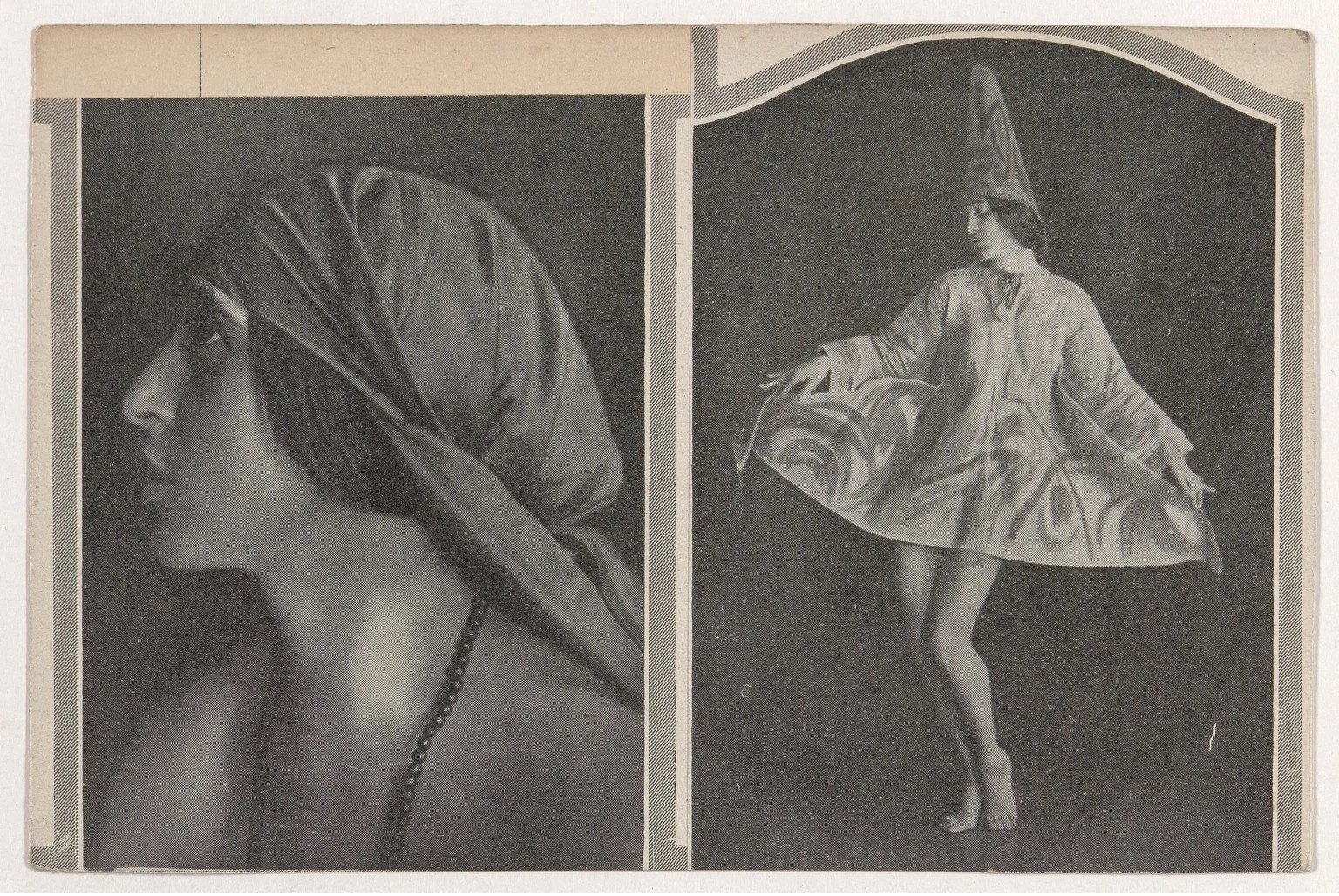
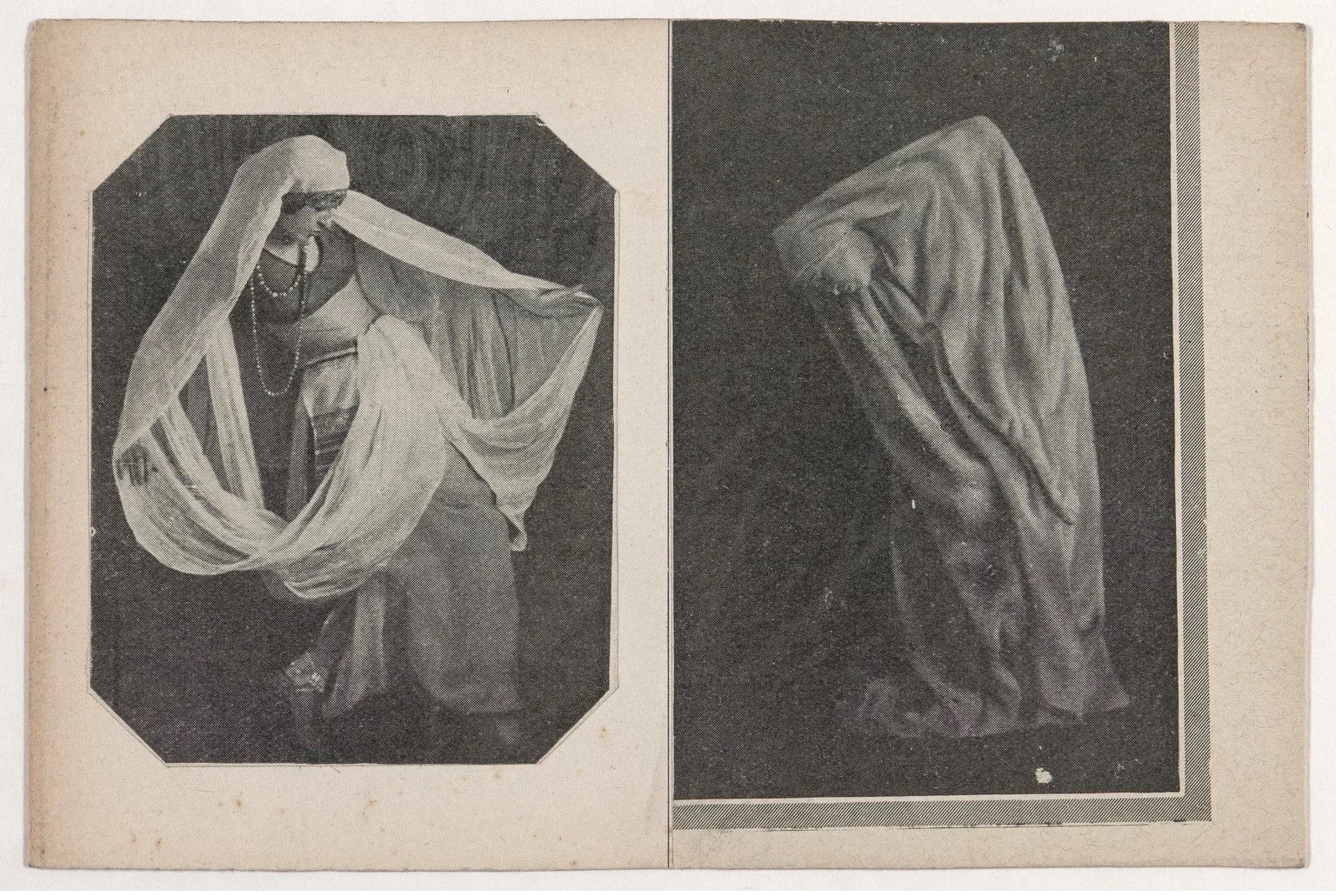
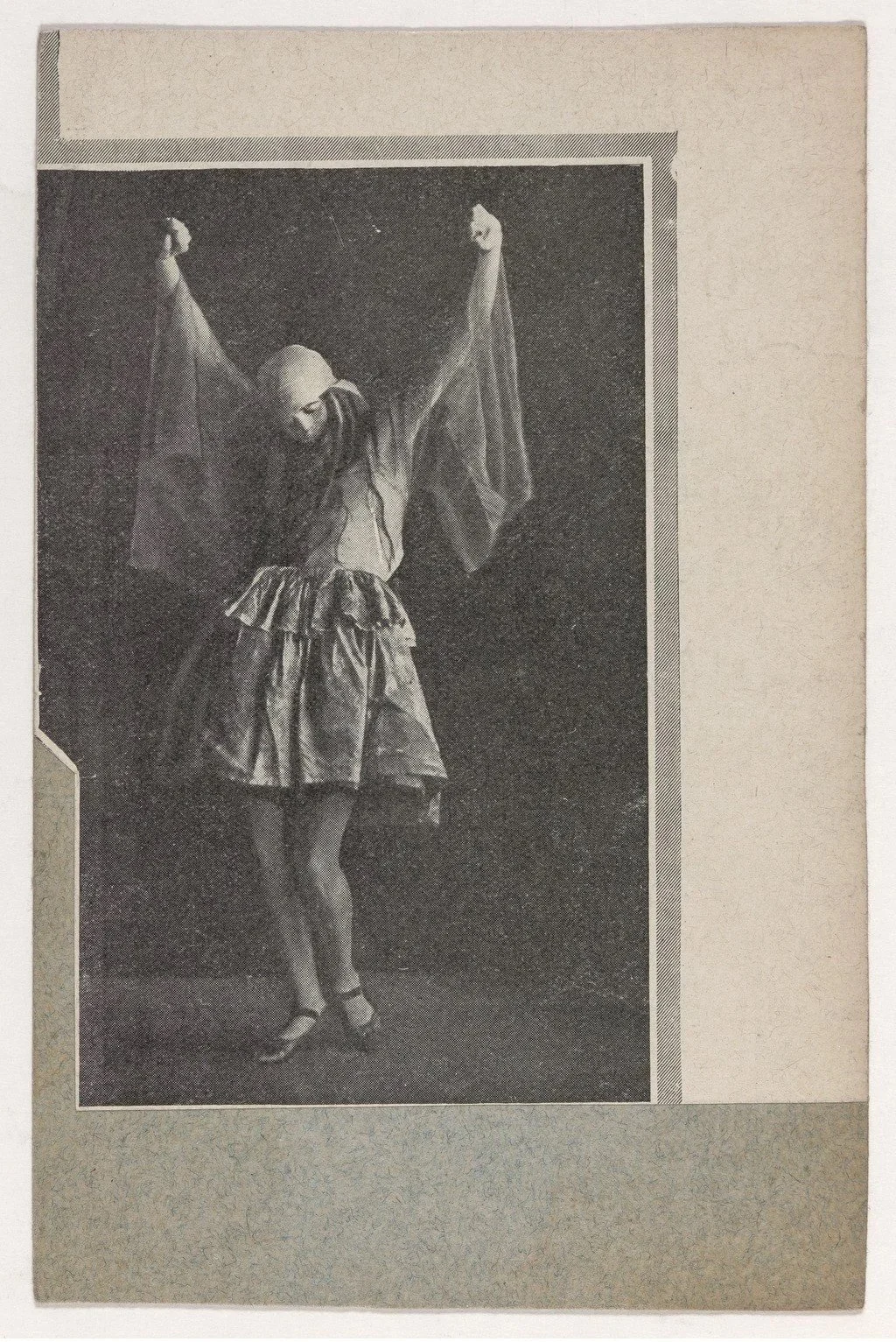
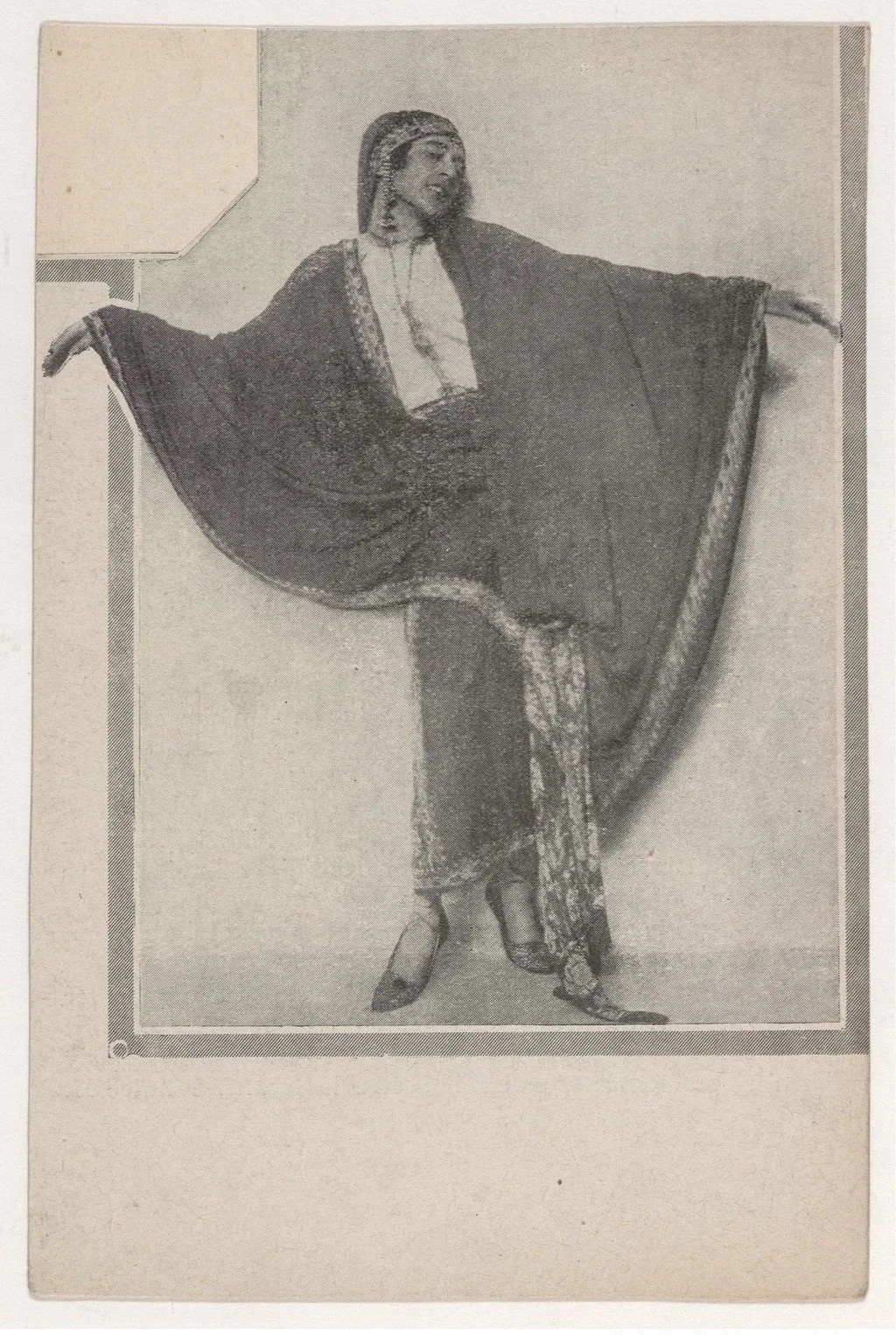
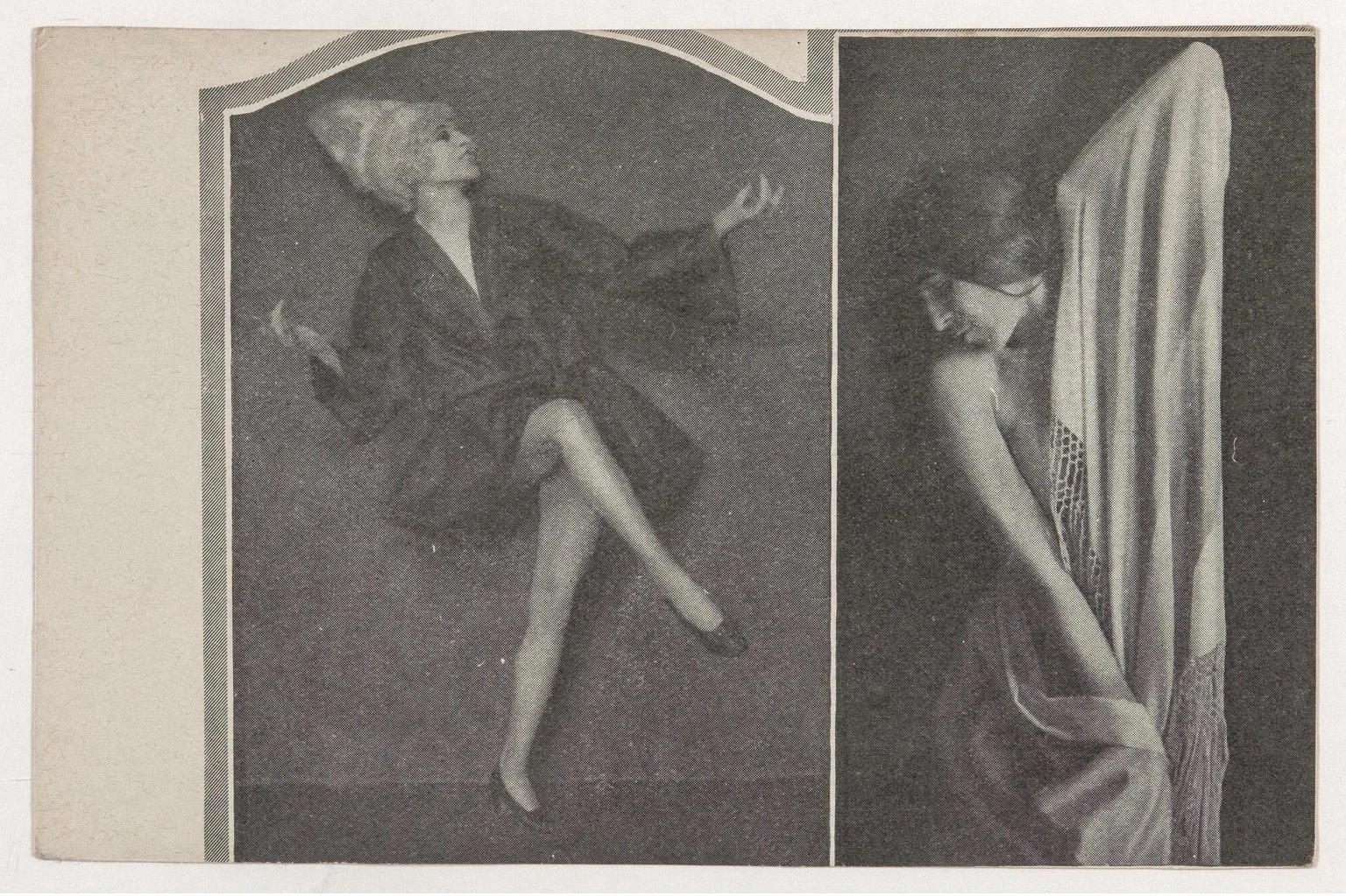
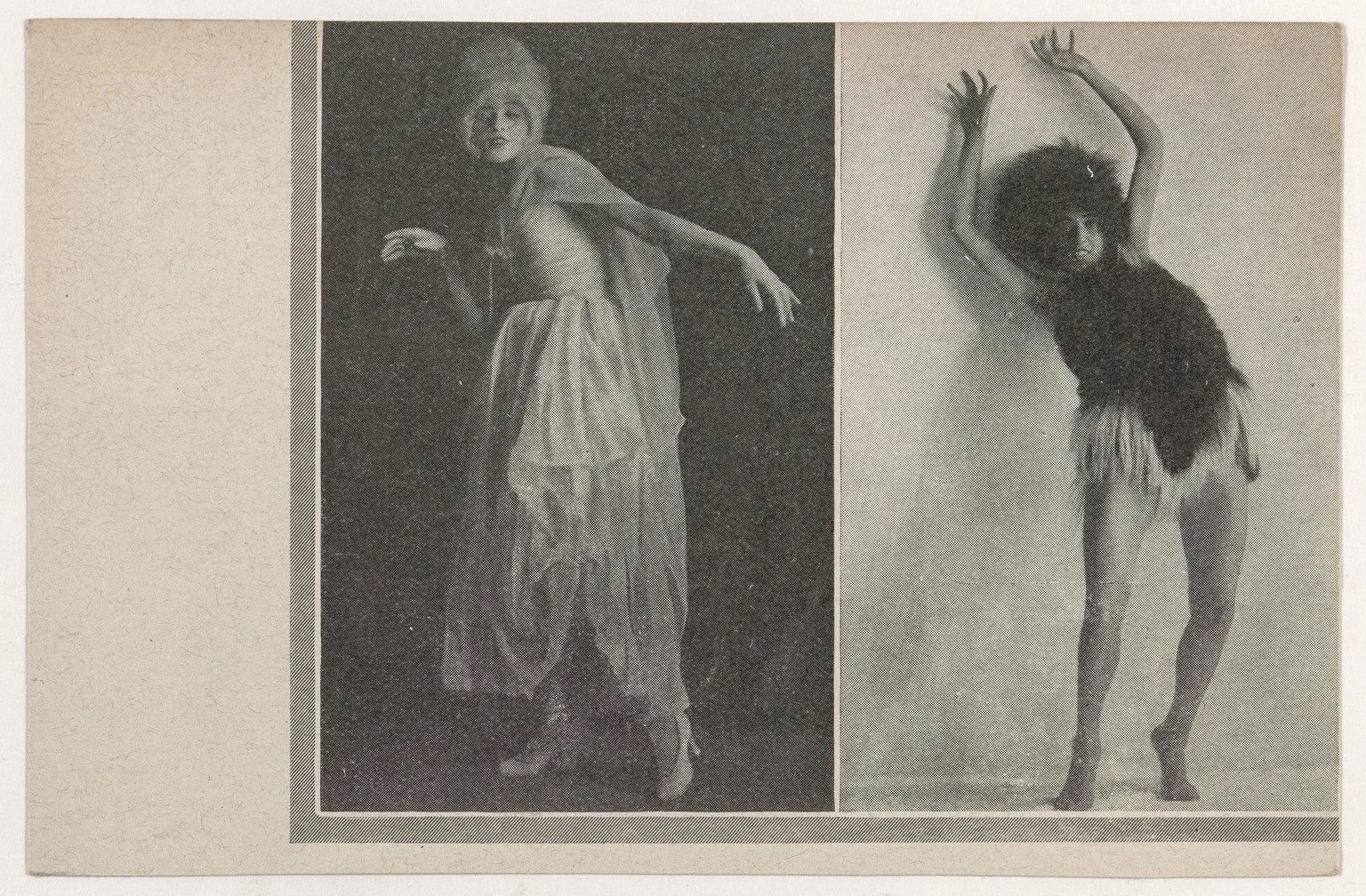
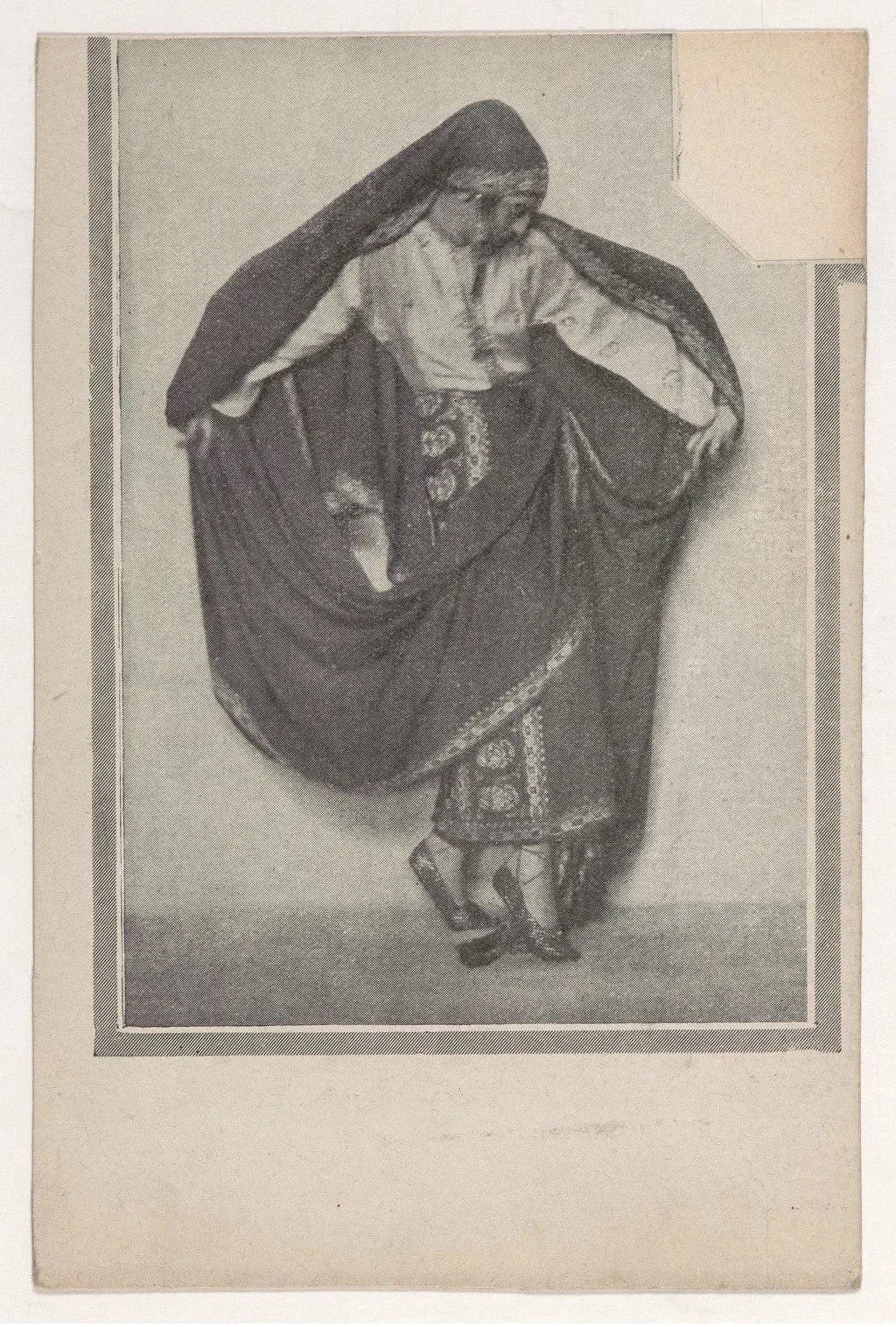
Finally, a series of the statuesque Moa Jean-Gabriel Lemoine attempted to paint with his words. She comes to life, she darts from page to page. I begin to add sound to her motion. The folds in the fabric she wears become animated and begin to shimmer. She dances herself back to a new beginning. I’m engrossed and flip the pages again and again, animating her swinging. I can’t help but notice her power, the one that Schiele had already tried to possess. The marble has its spark again. I tell yourself I’ll name your daughter Moa Mandu.
I want to find all of the ways in which her name was written. I read about her sudden movements in dance reviews, I mimic them as I troll the internet the libraries the emails of the librarians. I’m still waiting for some to answer. I want to see Moa dancing in front of the eyes of others, an indomitable flame. Marble, steel, all of the elements that make a person eternal and indestructible.
I look in my copy of The Book of the Dance by Arnold Genthe. Moa’s not there.
I wish it was 1922 again so my imagination can please stop racing as I watch the real thing à la Comédie des Champs-Elysées and with the Ballets Suédois!
I look in your copy of Dancers, Artists and Lovers: Ballets Suédois 1920-1925; and of You Don’t Like It, You Can Go To Hell! Ballets Suédois 1920-1925. I can’t find Moa.
A thing of marble and of steel that moves though it shouldn’t. Moa Mandu. 100 years later she moves, still, in a different way. She moved me.
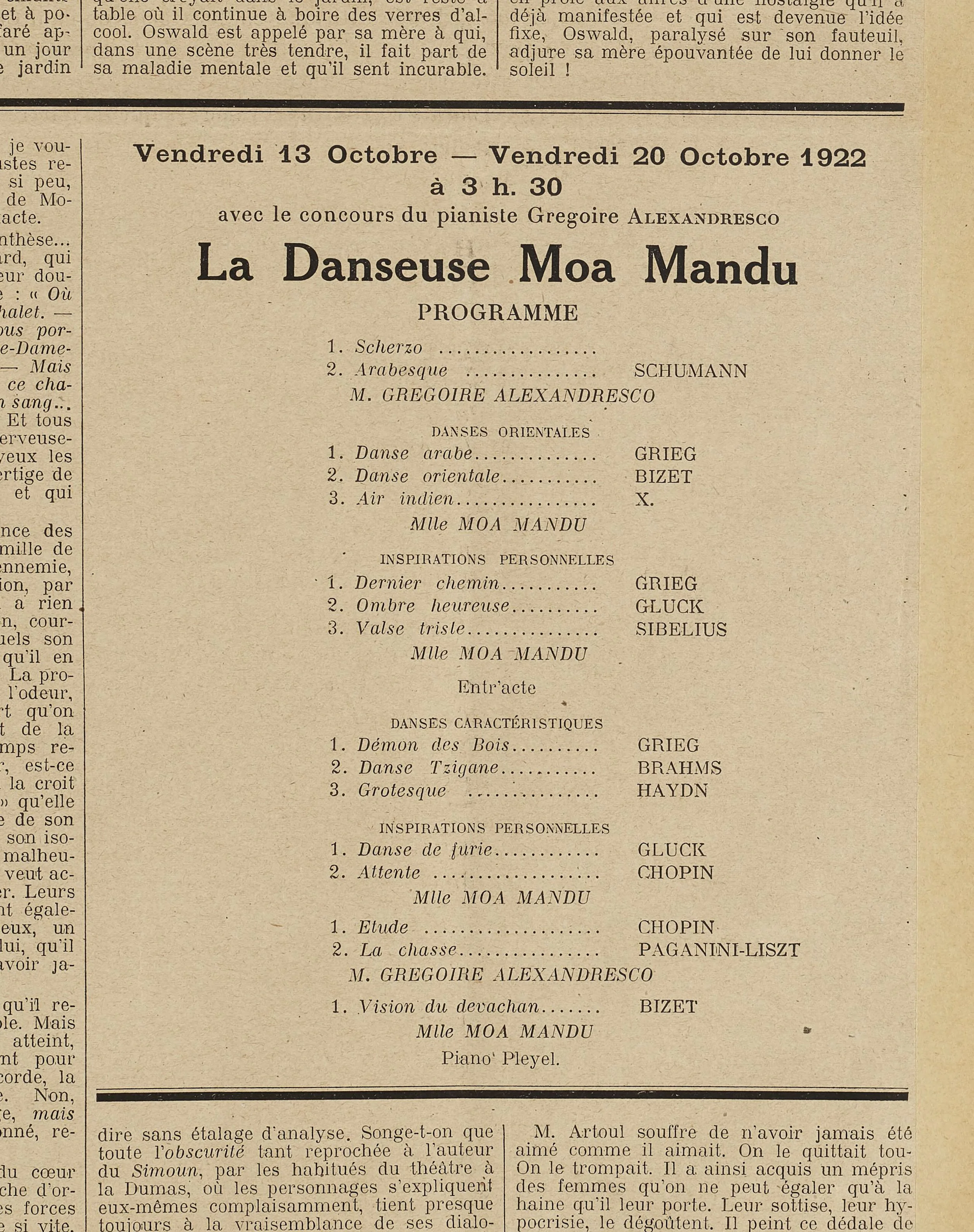
“Le rythme passait bien dans le corps, s’unissait à lui en une vapeur de volupté sacrée [et] flottant autour de cette danseuse dont, discrètement, les chevilles, garnies de clochettes, tintaient. Nous retrouvâmes ce sens de la lenteur et de la discrétion pleine de rêves dans un Air Indien puis dans “l’Ombre Heureuse” qui, couverte et entravée de longs voiles blancs, évoquent tantôt la Sainte Thérèse d’[Ávila], tantôt des figures du Sodom.”
Gabriel Boissy, L’Intransigeant 15 Octobre 1922.
[[Rythm moved within her body, becoming one with her as vapors of sacred voluptuousness floated around this dancer whose bell-clad ankles discretely jingled. We were reunited with a sense of slowness and sensibilities filled with dreams in Air Indien and then in l’Ombre Heureuse as she, draped in long white veils, evoked St Teresa of [Ávila] and figures of Sodom simultaneously.”
This is but the first chapter of all these wings I hope to spread: all the ways I want to say the name
Moa Mandu.
Words: Alexia Marmara