Doubt as a Pathway
by Micaela Brinsley
A streetlight. Buzzing, tingling. Another streetlight, flickering. A light rainfall, enough to feel it kiss the skin—not enough for an umbrella. Sprinkling in sequence instead of sheets, so a small girl, eighteen years old, can walk along avenues, consider every turn. Every tree’s already bare for the winter on this November day, as she winds to her destination. Looking up at incandescent bulbs, then a cemetery, she wonders whether she’ll be buried there too.
She turns a corner.
She’s left her parents’ house two hours ago already, down the dark brown staircase with a balustrade. She’s walking, having considered this decision from every angle. In rain, choices fall into shadow and so, what’s scary in light can turn real, twisting reason to regret into falling, easily. For some years now she’s wondered whether she was born with a stripe of sadness, one that sliced down from her left shoulder to her right hip bone, through her organs. It wasn’t a deep enough cut to kill her when she was born, but sharp enough the scar tissue over the cut never fully healed. Forever, she’s felt as if it’s so obvious to her, so clear—but no one sees. No one’s noticed there’s this cut across herself, this cut she’s always aware of. Even if it’s in her head, even if it’s only just there, it’s a thought that’s existed. In her so strong it turns her shy, afraid of trying to explain and afraid of failing to explain.
She’s been quiet for years now.
The wind picks up speed and she twists, her hair coming loose from her bun. From side to side she sways, into the center of the narrow street and then back to the edge, her breath leaving her quicker. She can see its echo in the air. Looking up, looking down: we’re now at the corner. This is the final chance, the only moment left for her to change her mind.
She leans back, opening her arms into a cross and screams—the silence of the years, it’s been too loud.
The water looks so dark. So still. How will it feel, when she touches it and then it overwhelms her and finally, finally, she’ll find herself subterranean? Will she ascend into the sky after hitting the bottom, or will she stay there forever; will no one ever find her?
Does it matter?
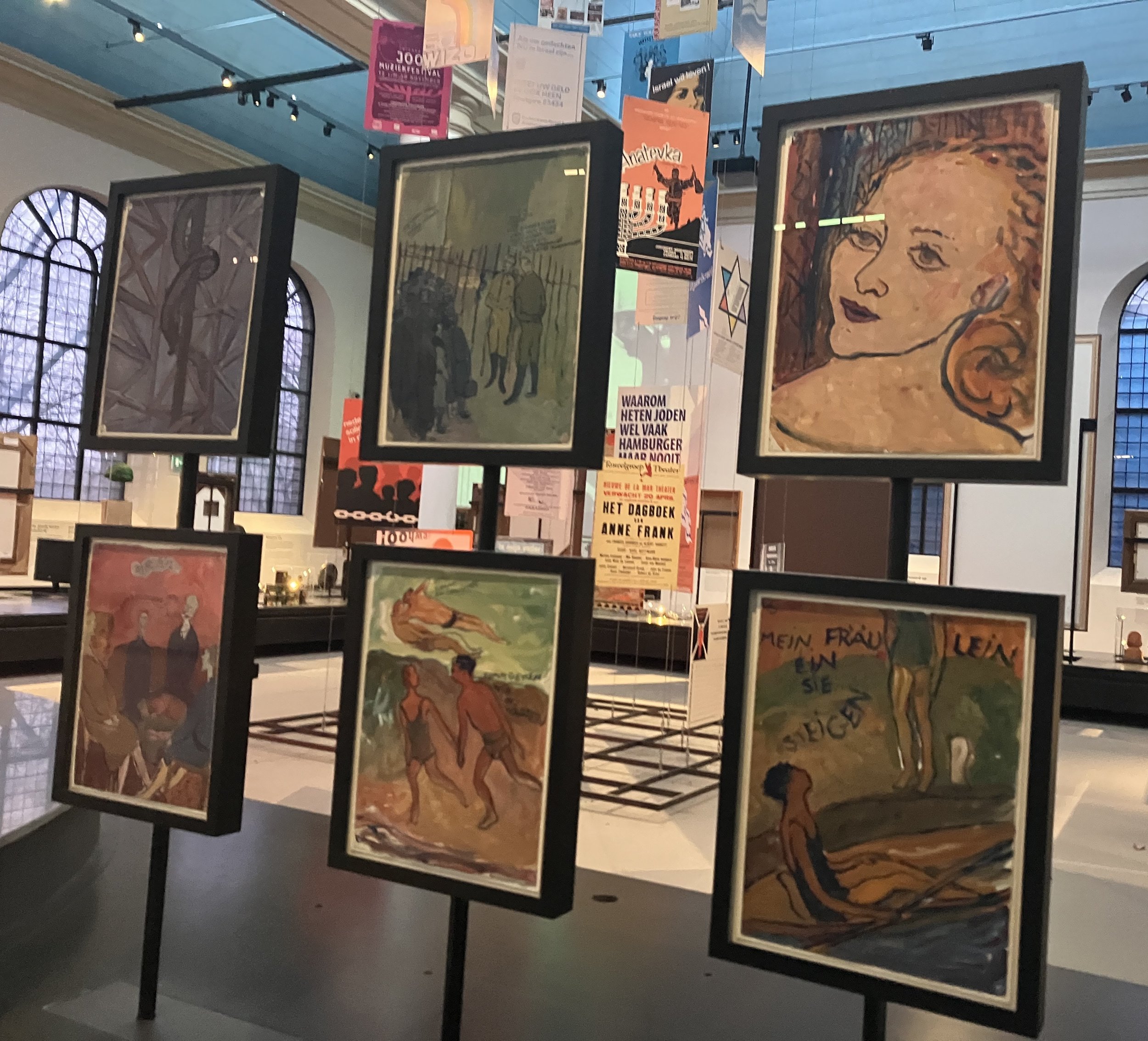
That was the suicide of an aunt told from the perspective of the niece she never met, the niece named after her. Following her death, there will be a sequence of other deaths, narrated back and forth in time, all against the backdrop of a changing Berlin from the beginning of the 20th century through the rise of fascism—until the niece’s eventual flight to France as a Jewish refugee. Structured as an epic opera informed by the likes of The Magic Flute by Wolfgang Amadeus Mozart and Bertolt Brecht’s The Threepenny Opera, this story is the beginning of an unclassifiable juggernaut made up of 769 pages of paint and gouache called Leben? oder Theater? (meaning Life? or Theater?) created by an artist named Charlotte Salomon. She was born in Berlin in 1917 and this series of paintings is considered by some critics to be the first graphic novel ever written. Structured as a künstlerroman—a genre designation typically for novels referring to the life and development of an artist—it also narrates Salomon’s evolution as a painter from childhood, to her training at an art academy, to her creative maturity. These paintings trace her Jewish, matrilineal family and their history of depression and suicide through a range of ecstatically colorful, abstract and fragmented paintings that frequently reference opera, music, theater, poetry, history, and literature. Multidisciplinary in content, form, and scope, the piece ends with the moment of its creation.
The touch of a glance accidental and the blurring of street corners into rain. Lipstick and its application before a night out. Fresh bread just out of the oven in the bakery, where you like to hide when you can’t think of anything else to do. Lost loves and phantom ones intersect over pavement that trams cross over—everything’s farther away.
But I’m somehow closer.
The map in your mind, the one you designed with her cemetery in the center and the streets forming its moats, it’s all I’ve got to anchor me now. No way to wander anywhere familiar since this train’s taking me so far into a distance, away from the safety of the earliness of the morning spent with a coffee mug and my mom in her home. Away from the nights spent on benches on train station platforms, sneaking away from the fear of the unknown—but now I’m touching a different kind.
Away from the frustration of not understanding the right response to, you don’t need to know. But you did. Found it outside of the stories told to you by refugees masquerading as violinists in the days when your stepmother was arranging for them to receive false papers to leave Germany, the sad look in Albert Einstein’s eyes before he’d walk out of their apartment for some other country and the last time you saw it, once you’d stood up after tying his shoes—airwaves silent until the streets joined in his yowling.
The closing in of the fog of a chokehold, growing thicker and thicker and thicker until everyone stopped talking about what they’d been up to because sharing, it was a reminder of what tomorrow wouldn’t be.
You leave the train. Wait for another on a different platform. Back to the same position inside another place, staring out this time at another face you don’t recognize. ‘This is the final call for the Ten Fifteen Service to Nice on Platform Seven,’ the conductor announces and the whistles blow.
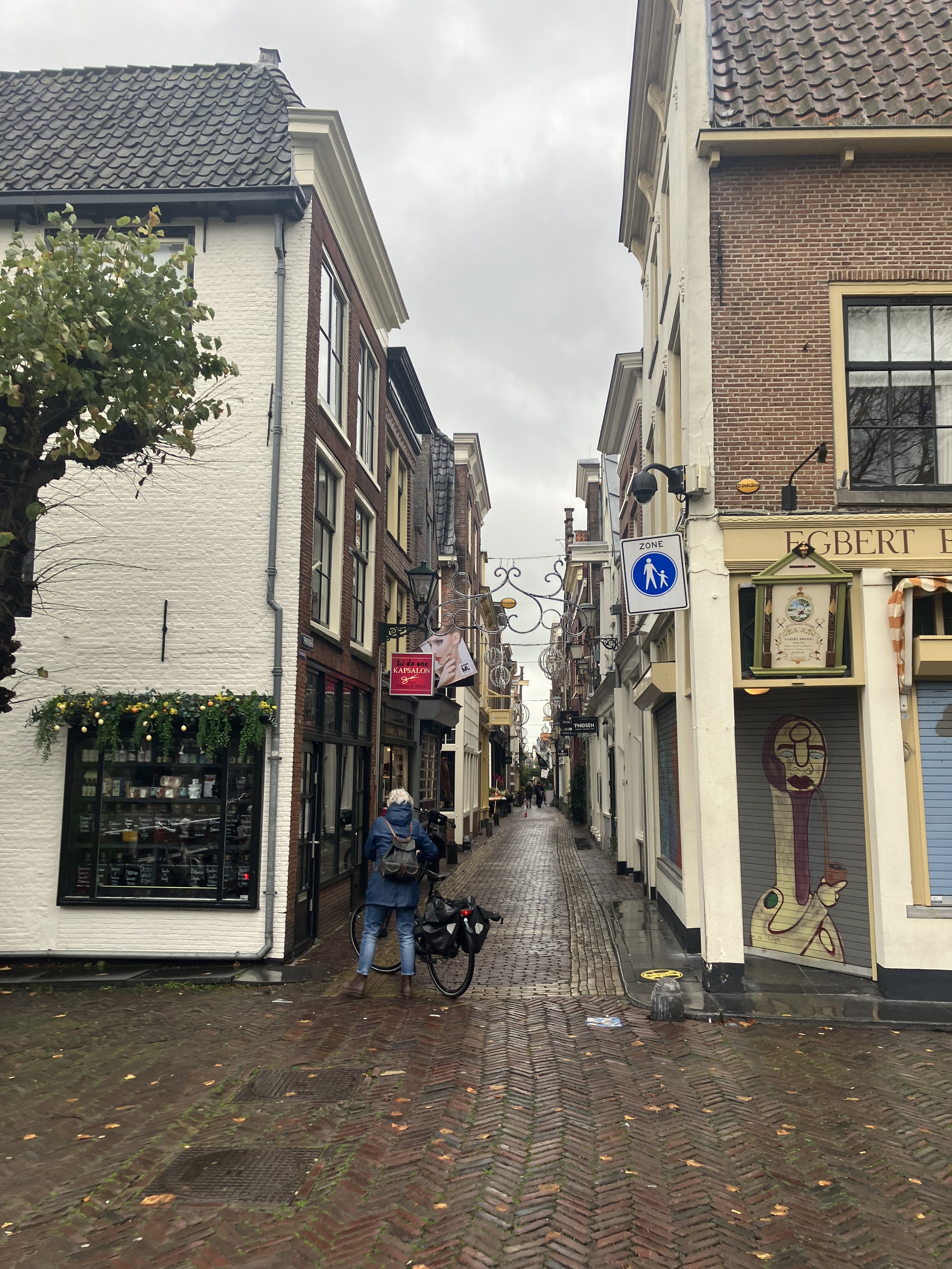
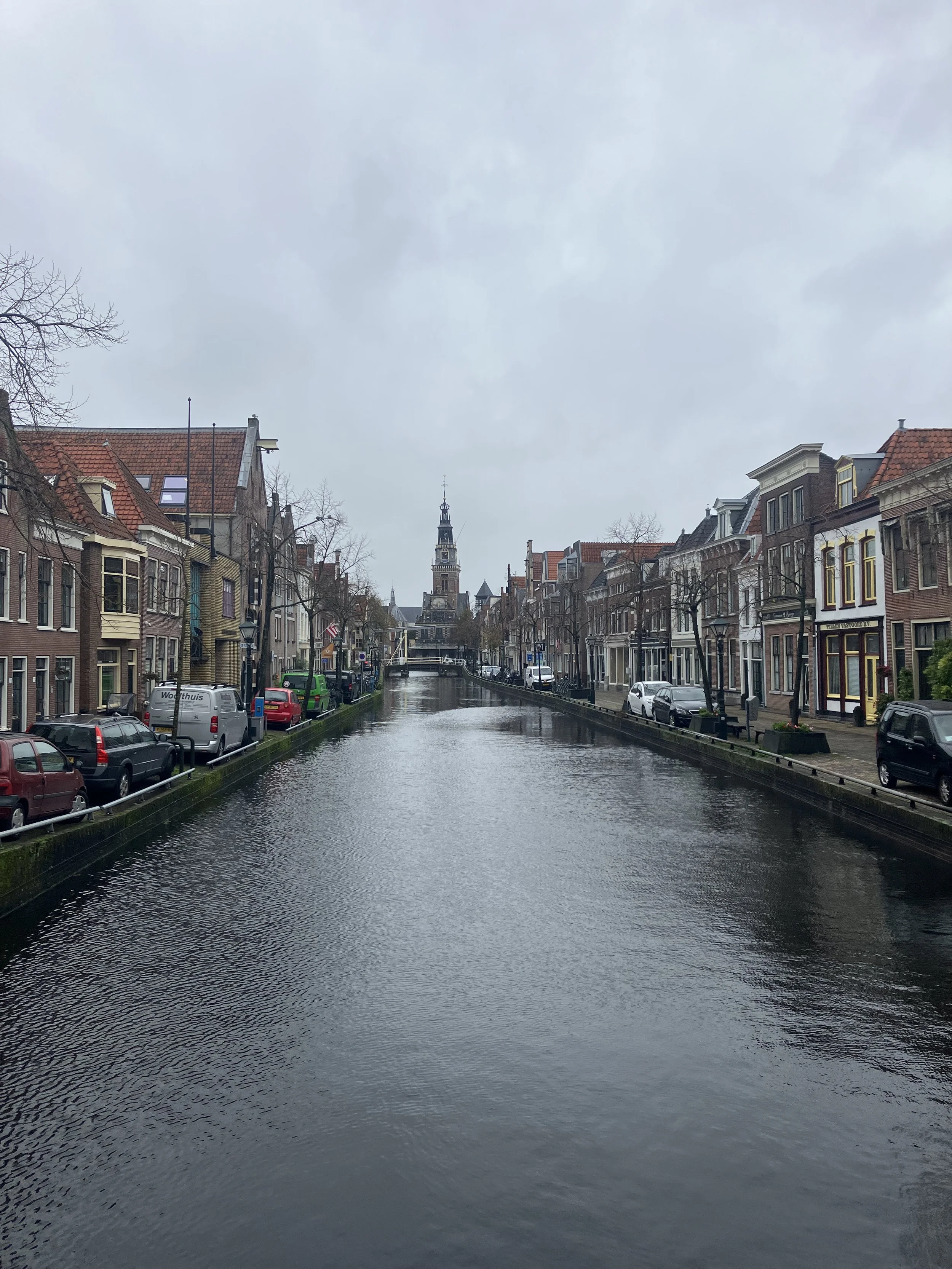
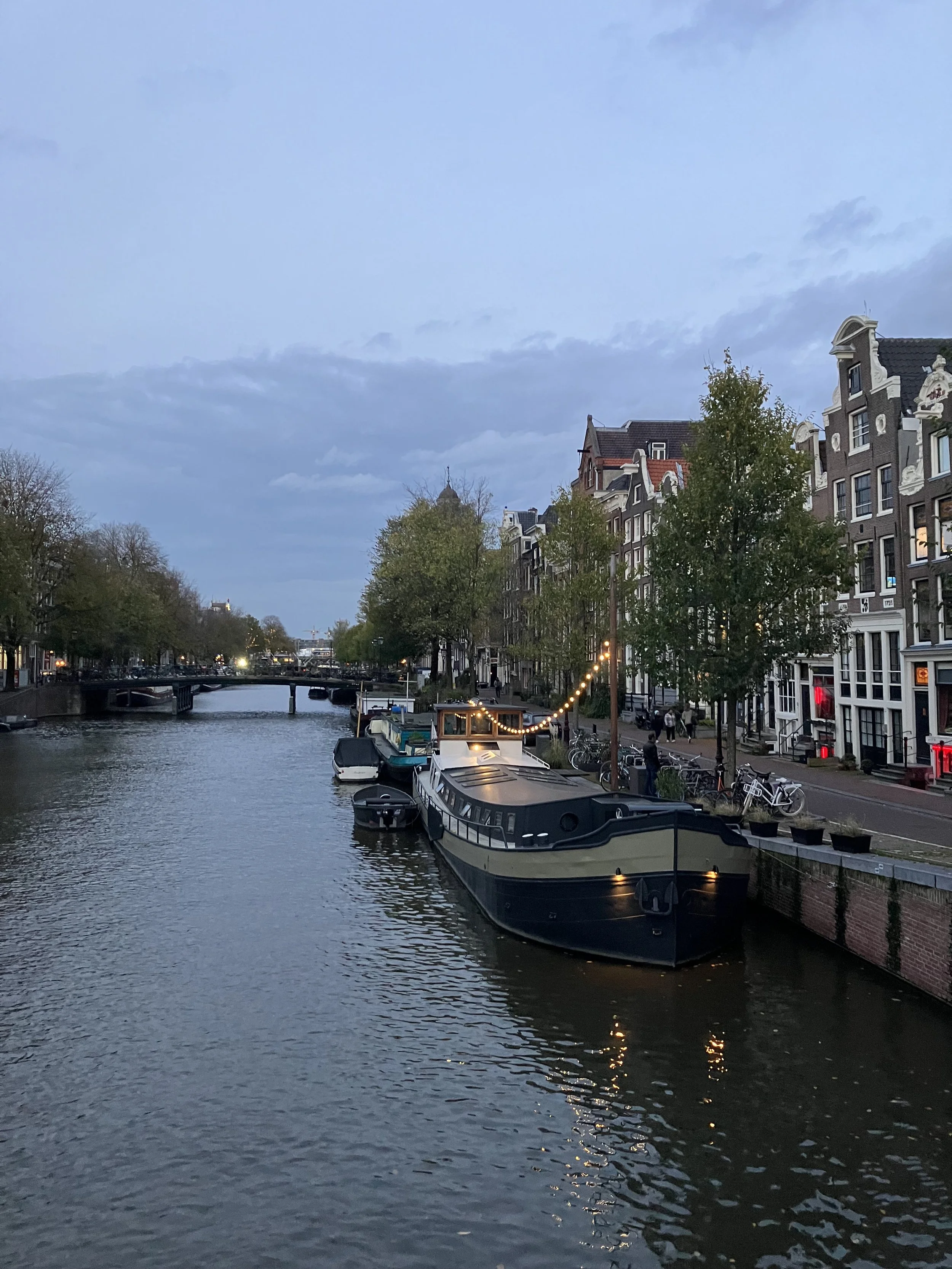
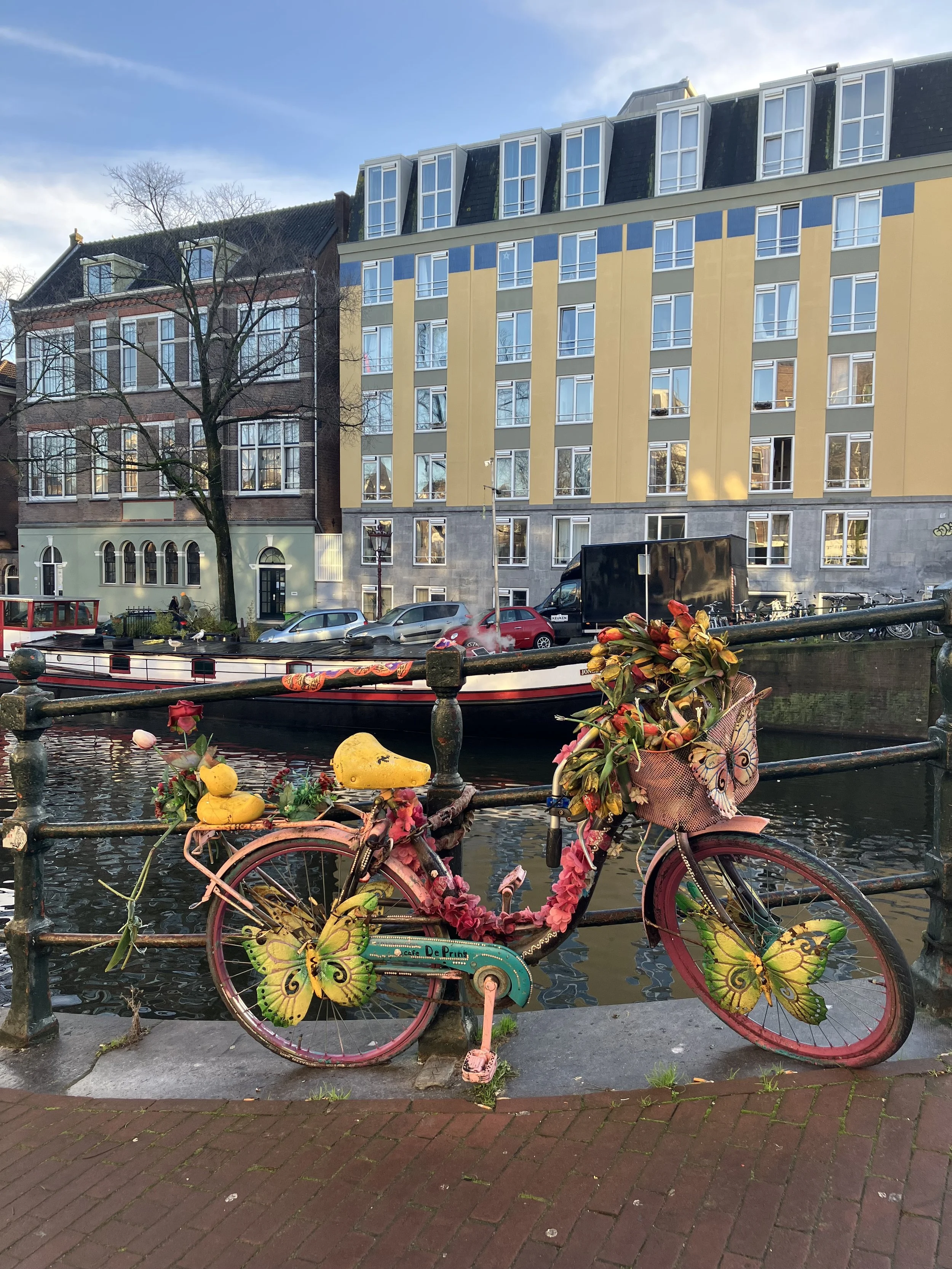
Cyclical in nature and haunting in its breadth, I was so consumed by Leben? oder Theater? that I packed up my life in New York City in order to spend two and a half months in Amsterdam to study it. No grant, no academic program, no other explanation for it to give to friends and family but my own desire. With my remote work for a tech startup I didn’t care about funding my expedition, I decided to spend the end of 2022 alone in a country I barely knew, ruminating on Salomon’s life-changing decision to sequester herself in a hotel during World War II to make her life’s work.
You slither past unsuspecting minds, taking a word from here, a scene from there, a kiss from far away. Each word, a note. Each note, each sentence, is an image embellished with color, context, a thought bubble, a musical reference. Every phrase is a return to a street corner. A string, a period. A song a confession, unspeakable without a tune. A scaffolding the center, the center the decoration the decoration an octopus. The desire the same as the wonder on her face: your charge. A head tilts back. A conductor cleans their baton. A man breaks a promise. A girl waits for a letter. An amateur writes a book of theory. Another, a book of poetry. You, you’re something no one knew. In hiding, refugees and violinists, both playing in an orchestra this night in front of a group of fascists who’ve taken over your government. Some pretending to play so they can flee with false papers labeled ‘musician,’ on this last night in their hometown, the last night before they leave for a country far away.
At the time that I learned about Leben? oder Theater? I was very involved in the theater scene in New York City, not quite sure if I wanted to stay there and make work that would appeal to a commercial gaze. Full of unease about how to identify the ‘right’ way to make work that felt as if it was emerging from actual experiences. Confident at least that something was missing in the emphasis on story, on narrative, that I heard in countless workshops of plays essentially copying Arthur Miller. I want to see the seams, I think as I buy another cappuccino at St. Kilda’s, I want to see the yearning. The slipperiness of desire. Walls, torn apart. A stage, full of red. A set of images, connected more by association than some affinity to a plotline. I want broken lines. Ultimately, I chose to listen to the refrain I kept hearing in my mind as I traced the streets of Crown Heights, waiting for some interruption to Charlotte, Charlotte, Charlotte. I soon found a cheap place to stay in the outskirts of Amsterdam where Salomon’s archives are stored, and booked a flight.
I brought along a set of empty notebooks, my passport, and not much else.
I soon found myself walking along the borders between fiction and nonfiction, poetry and prose, painting and literature, life and theater, through Salomon’s explorations of those questions as a documentarian of her family. Completely unprepared for the loneliness that would set in, but also for the way obsession creeps its way into the blood.
Hours upon hours of pouring over her work, reading essays by theorists also dedicated to her memory, listening to her operatic and musical influences, taking note of every reference within her work, wandering the streets of the city that would become her father’s home after the war ended and he learned his daughter had been murdered, pregnant, in a concentration camp. All of it started to intertwine with my experience of feeling solitude become a part of me, the images on the gouaches, my own memories. I’d chosen to limit my own social interactions, becoming a sponge in order to better understand Salomon—but why?
You lie on a hotel room floor, wood across your back as you try to remember the smell of your childhood home. You pace in front of a window, with a view of the sea. You look through notes you took over the course of years and years, sketches of the same face, repeated over and over.
Red flags flutter kilometers away, in your country, a place I still haven’t visited. Crashes ricochet in your mind as paint dances through the air. Marching, so much marching, thunders as a percussion whose rhythm you resist. The curtains around the windowpane stroke your cheek, when you lean out for a swallow of ocean air.
Take to the floor.
You return, to your story. Ghouls on the tops of buildings cast shadows over the guards at the entrance of forests outlined in dark blue and glasses, a pair keep flashing in a train window.
A certain shade of blonde essentially gold, sways behind it all, eyes wide.
Rows of students listen to their teacher. Next to that image, a girl with gold hair visits the grave of a parent. One two three four five six seven eight silhouettes, nine in a line and below that, tanks drive in front of apartment buildings. The same girl irons laundry in the home of a stranger. Now it’s the nighttime and she’s sitting in on lectures with her legs parallel. A famous professor of music stops her after a lecture, maybe because she asked a question, maybe because she’s a beauty, maybe because he can see there’s something in her he wants for himself.
You imagine all of this from thousands of kilometers away, decades in the future—wanting her too.
There’s been so much written already about the genetic inheritance of mental illness, so much art criticism about paintings, so many testimonies from victims of genocide—why I think that I need to experience that through her lens in isolation, as if erasing my entire sense of self will lead to some sort of revelation, I don’t know. Why I felt that I, a twenty-five-year-old person who grew up in Tokyo in the 21st century, will find something to write about that was new, interesting, dynamic—impossible to defend or explain. Why I feel I’m subliminally connected to her in Amsterdam by virtue of being the exact same age in my life as she was in hers when she made it, too ridiculous to think of as more than a coincidence. Though my mind starts to lose track of where to put a comma in a sentence, sometimes even how to conjugate a verb. End a sentence at the right moment, I try to do it. Harder. Language, unsticking from itself, unraveled me into further confusion. Maybe I came here because at the center is a love story between two women, I try to justify to myself. Maybe there’s no other way to write about Jewishness except by othering myself, somehow in the process of it.
The cymbals lie on a table towards the back and an electric guitar’s propped up on a stand. Musicians creak over their instruments, warming up. A few horns are teasing each other and the clarinet player, you show their face as they suck a reed, the lick of their tongue faint in the background. Your shadow, with its hands covered in color from yesterday’s session you couldn’t wash off, put on the shirt you wear to paint as you stand offstage, watching everything starting to sizzle. You set up your easel. Humming along to noises tuning themselves into clarity, the scene’s starting to set itself up for you and as it always does. You wander. Plucking that sentence there, that rhyme into the frame from years ago, and the face of a friend who abandoned you for someone prettier walks with you into a cinema to see what would become a lesbian classic—Mädchen in Uniform—the week after it came out.
As I look back at my choice two and a half years ago from my apartment now in Buenos Aires, I can see how I used studying Salomon as an excuse, a refusal to confront my own predilections. I supplanted my quarter-life crisis with an apprenticeship to a ghost.
I’m not alone, at least there’s that. Many artists and writers have dedicated much of their life—and books—to sinking within Salomon’s paintings: Jacqueline Rose, Griselda Pollock, Maria Stepanova, countless others.
But there’s still something inexplicable about how much I want to explain it to someone, how wrenching it feels when I look at one of her gouaches—as if my entire chest splits open from the slice of a well-sharpened knife. I’m happy to destroy the meat of my own insides. Pretty evaporates as a relevant description of anything. I become my own experiment, barely cognizant of the borders of my skin. I am not a tame person. If I ever seem that way, when I look at Leben? oder Theater? I lose any resemblance to it.
It’s difficult for me to articulate the origins of my particular desire—it feels as if it still lives in me, born from the underground of myself. A sense of recognition? That’s the closest I can get to describing it. As if the flow of the painted work, a graphic novel, a work of disconnected autofiction, all made sense—even though logic wasn’t anywhere in its structure. All of its shifts in time, the collapse of history into the conflagration of memory, the way the colors change, how desire moves from women to men back to women, how the work evolves from realism to abstraction so by its end, it focuses on the childhood of a girl who looked around as both an observer and participant of the world around her.
To center a story with all of that seemed so obvious to me the moment I looked at it for the first time, yet I’d never seen one like it before. Rarely, since—even though Salomon made it almost a century ago.
‘This is the final call for the Ten Fifteen Service to Nice on Platform Seven,’ the conductor announces and the whistles blow. Your forearms dig into the ledge at the bottom of the train window and you look down at them, huddled together in a triangle. It’s as if they’re used to it already, though they’ve been without you for less than three minutes. Paulina, Albert, Alfred. Their faces, hassled and wearied, are already looking away, down the track, to see if anyone else is getting on the train.
Turning to your right, you see someone else like you. Someone running. To your left, it’s harder to tell. Is it easy to see? How it looks to be someone in flight, backwards to a room that’s been titled safe. Somewhere with locks everywhere, creaks, they’ll soon remind you of what you’ve left behind—security. Or, the memory of it. What to call this loss? Leaving the only place you’ve ever lived to somewhere else where you may not know where to look, where to go, who you can talk to and how. How long will this last? The sensation that there’s nothing left for company but it, the force inside you’ve kept at bay for years and years undetected—mostly.
Looking out again, she’s turned to you. The other two continue talking and here it is again, maybe for the last time, the feeling of color washing over you when you look at her. Or hear her voice or smell her perfume or watch her listen to a concert and she’s looking at you directly, as if she wants you to know. What? What’s there to know, when there’s no way it’ll ever be said?
The lamps on the platform start to buzz as another whistle shrieks and shadows over her face flicker. The doors all close at the same time—slamming, sighing, moaning. It’s the end. The last time. You’ll leave part of you here, where you’ll never return. Within eye contact blurred by glass there’s a distance you’re always chasing—between her and your idea of her, your heart and what you wish it didn’t want, Berlin and the place you’re flying to. Far, away into hiding. I’ll go gladly, you told them, there’s nothing left for me here. Eyes, hers remind you otherwise, but that lie’s as close to the truth as you’ll ever get and so…
Albert turns and waves and you can see he’s been crying and you realize—you’ve been too. Lick your wet mouth. The last one to turn suddenly does and together they’re in their new triangle. Without you and smoke swirls, right before a jerk. It’s beginning. Shuddering. A groaning crosses the tracks you’ll trace with your gaze as you go, with the mission to hold on as much as you can, to the person you are.
You twist to look back at them all and she’s stopped waving. Shrinking, shrinking, shrinking… she’s becoming ever smaller. You turn back to look at the forward you’re moving to. One last glance back, give yourself one more tease.
She’s so small.
I’m in the midst of figuring out what to do about all of this. About my instinct that the desire to become an artist and conviction of the truth of queerness feel the same. The notes about the countless essays I’ve read, the images of thousands of photographs I took—where should I put them? My diaries from my time in the Netherlands, where I’d write when I’d go for a cup of coffee near the archives once they closed at the end of the day. In those two and a half months, I read literature about matriarchy, resistance, anti-Zionism, phenomenology, depression, and the history of fascism. Given the current trajectory of US politics, as a person with citizenship from that country, I increasingly feel that my job as a writer and researcher is to study the ways artists have grappled with authoritarianism in the past. I’ve recently revisited the work of Walter Benjamin, Charlotte Delbo, Julia Kristeva, Hannah Arendt, Griselda Pollock, and Elsa Morante. Others. But what to do about this obsession that followed me from Amsterdam to Los Angeles, and now to Buenos Aires? It feels impossible to pin it down, to excavate my passion for art from this compulsion to make life choices according to its force.
There are people like you anywhere, who begin their entrances in stories by hiding in the shadows, tilting their heads to the side in opposition of most paintings across history, where posing demure embodies elegance. You tilt your head to help you look closer. Your head moves, your eyelids narrow, you breathe in sharply through your nose and your mouth tightens. Your body may arc in a curve inward, an equivalent only found in weeping willows after rain. In this world of people and spaces and groups perpetuating institutional codes of hegemonic behavior that none of us designed, you, you design your own version—even if it’s impossible to understand. Standing in front of an easel, in front of the sea. Maybe the attempt to identify some logic to your mind is a pointless use of my time. Will remain forever a mystery. But what I do know: you were on this earth for something more than understanding.
I still don’t know what it means to be alive, much less how to articulate its multiplicity. The limitations on self-expression that social mores impose and how solitude comes with its own rules too. How to process the difficulty of writing ‘I love you’ without it seeming like a cliché—I still haven’t figured that one out.
I’m not in love with a fictional character from a work of art, I’m not in love with its writer. But I’m in love with how looking at the work makes me feel—how constant that is. How it’s been the same, from the time I saw it online in the Brooklyn Public Library to now, when I occasionally visit the website for the digitized pages of the work I’ve bookmarked on my laptop. I continue to be seduced by gouache, by stories about mothers and daughters, by the fragmentation that splits open a story when its interiority takes over. Still stunned by how obvious it is that fascism pretends to be casual until—suddenly—it’s not. How memory feels so trustworthy when there’s a photograph left as evidence but when there isn’t, I can be impressionable to a fault. Scared always, by that lingering voice inside my head that reminds me I come from a line of women who contract Alzheimer’s; how my family’s been studied by scientists as if monkeys in an experiment to identify its cause—adding me to the laundry list of names, endless misunderstood women who lost their minds.
Nevertheless, I still feel as if I’m fumbling around in the dark, looking for the right room to enter where I’ll finally find the form for expressing how much Salomon’s voice has infected my own since those months with no one but shards of her memory.
I suffer sufficiently in the world—I know now that I don’t need to isolate myself totally in order to understand that idea. To live it. Though I’ve made choices after those months that I wouldn’t have made had I not left New York City. As the narrator of Marlen Haushofer’s novel The Wall remarks, ‘loneliness led me, in moments free of memory and consciousness, to see the great brilliance of life again.’
When the space between subject and foam clears, a choice appears. On the precipice of bubbles and fishnets, the distance between a ledge and the place it was built to protect wanderers from, shrinks. It’s so close and you’re here, she’s here, I’m here, in the second before an entrance. In the moment before the bits, the details, the everydays, the nuances, the textures, the people you’ve tried on and off, the polluted breaths you inhale, the men you follow, the women you wish for, the desire you press down until you almost feel as if you’ve found a way to extinguish it completely. But you’ve chosen reticence as a concealer, defiance wrapped in loose clothing, tied together with a mission held between your hands—I will too.
As if I’m in an elevator that closed its doors at Charlotte with an unknown floor as my destination, I’ve now spent two and a half years in this liminal space. A story about the making of a story and here I am, trying to make sense of how to tell what it means to me. All I know is, I’ve spent years lingering in the echo of a scream.
The stage is empty. The string section’s silent. The actors, behind the curtain. The stage manager’s confirming with the deck crew that the rigging’s secure and the props are placed in their right positions. Call the cue before the blackout. The fluttering of programs, the too-high laughter from someone dating a person less intelligent than them, the scent of perfume applied too many times underneath the armpit of someone in high heels, sink into the carpet. The audience’s full. They all filed in while we all started reading about an aunt named Charlotte, written by a niece named Charlotte, and now, they’re turning their phones to airplane mode. That moment that happens in the theater when the audience realizes at the exact same moment that a beginning is present—you can taste its silence.
Doubt is the start of everything.
Blackout.
Micaela Brinsley is a Tokyo-born writer, editor, and independent researcher of art and performance. Her debut pamphlet, Forward, was published by Cutt Press. Her prose can be found in Tenement Press, Tique, Horizon Magazine, Minor Literature[s], and Another Gaze. She is a contributing writer for the journal A Women's Thing, where she writes essays about portraiture and the surrealist period. She works for the leading academic journal on performance, TDR: The Drama Review, and serves as the co-editor-in-chief of the international arts and literary magazine, La Piccioletta Barca. She is currently based in Buenos Aires.