Manar, Daughter of Palestine
A Fashion Designer from Gaza
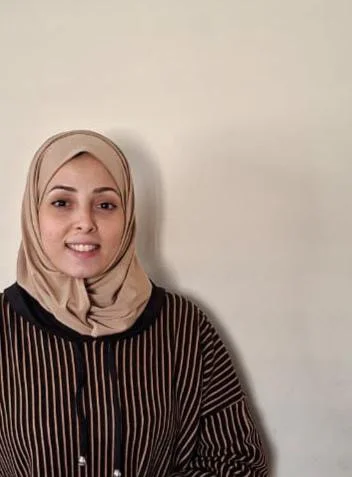
My name is Manar.
I am a daughter of Gaza, Palestine
a place that once held my childhood joy, and now holds an unending nightmare.
Before this genocide, my life was shaped by ordinary dreams and quiet hope.
I grew up in a large home that carried my entire life within its walls. That house was not just a building, it was memory itself. Every corner held a story, every room a moment of laughter, safety, and belonging. All our photographs lived there, our faces, our celebrations, our growing years.
Now that home is gone. Burned , Destroyed , Even our images did not survive. Everything that once proved we existed together became ash and memory.
A few days ago I remembered a childhood dream. I am very happy that I had the opportunity to think about dreaming, because for me, a dream is an inner voice telling me how I want to be and how I want to live. A dream is completely different from goals, because for me, goals are imposed on us and must be compatible with reality in order for us to adapt to the circumstances around us. As a child, I lived a happy childhood. I dreamed freely, I fell deeply in love with architecture, with the idea of building wonderful and beautiful spaces that could protect people, hold dignity, and preserve life.
But in Gaza, dreams are often reshaped by siege,
By unemployment so widespread it erases hope.
My older brother, an architectural engineer, was my role model and the closest person to my heart. Despite his education and talent, he could not find work in his field. Watching his struggle, and hearing his honest advice, I stepped away from architecture. Not because I stopped loving it, but because survival demanded another choice.
I studied medical laboratory science, then added a year of education, I became a science teacher, holding two degrees, believing this path might offer stability in an unstable land.
Then the genocide began.
Since that moment, my life has stopped resembling anything familiar.
I became distant from my profession, from routine, from normal time.
My present feels like a continuous nightmare, one I live inside, fully awake.
I lost my older brother, the engineer, my guide, my companion, my sense of safety.
For two years now, we do not know his fate.
This uncertainty lives with me every day, heavy and unanswered.
I am also a mother of two daughters, trying to raise life in the middle of destruction. I carry fear silently while teaching them how to smile, I try to offer them warmth while everything around us collapses. I want them to remember love, not only loss. I want to give them a childhood that does not mirror my wounds.
In the heart of all this, art found me.
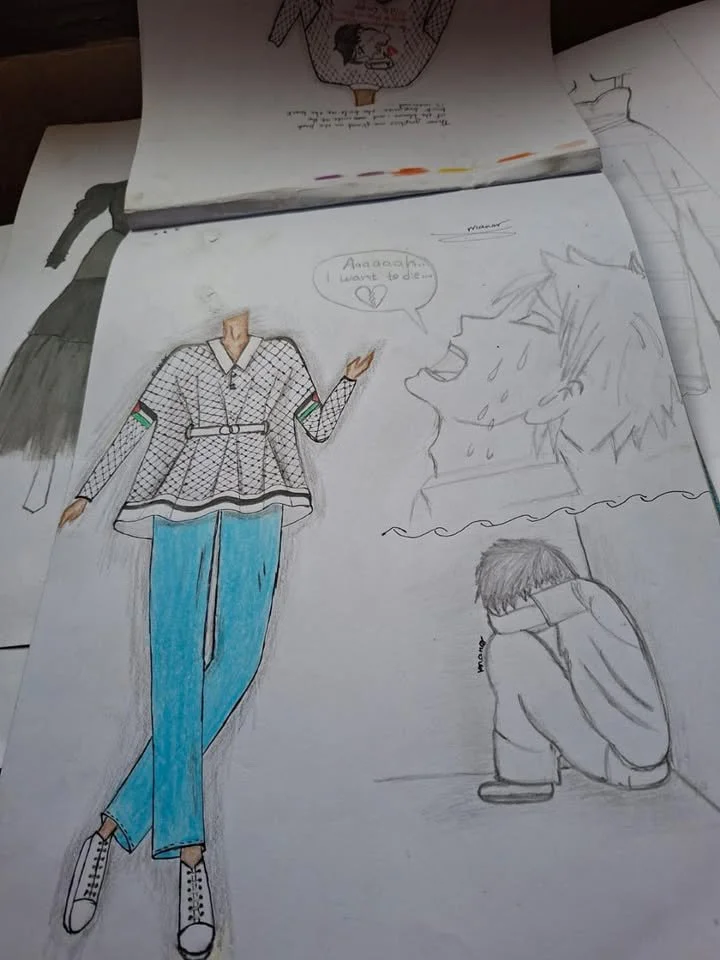
Art became my language when words failed,
A place where I could empty my grief, my fear, and my memories without explanation. It gave me a quiet kind of hope, as if telling me that there might still be a future, more beautiful than the present I am surviving.
My faith did not remove my pain, but it made me feel seen. I believe that God sees me in every state, in my weakness, my patience, my exhaustion, and my effort.
Because I believe God sees me, I strive to become the best version of myself, not out of perfection, but out of sincerity, seeking to live in a way that pleases Him.
I hold onto art as both healing and resistance. Through it, my passion grew toward fashion design, a way to stitch memory, identity, and survival into something visible.
Today, I carry my homeland within me.
I carry my brother’s absence.
I carry my destroyed home and my interrupted life.
But I also carry faith, creativity, and determination ..... quiet strengths that refuse to disappear.
This is not only my story.
It is the story of countless Palestinians, whose lives were never allowed to unfold naturally.
Yet still, we continue ....creating, remembering, and insisting that our voices deserve space in this world.
I believe that God sees me every moment,
and in a humanity worth loving.
For that reason, I continue—
with faith, compassion, and hope for all.
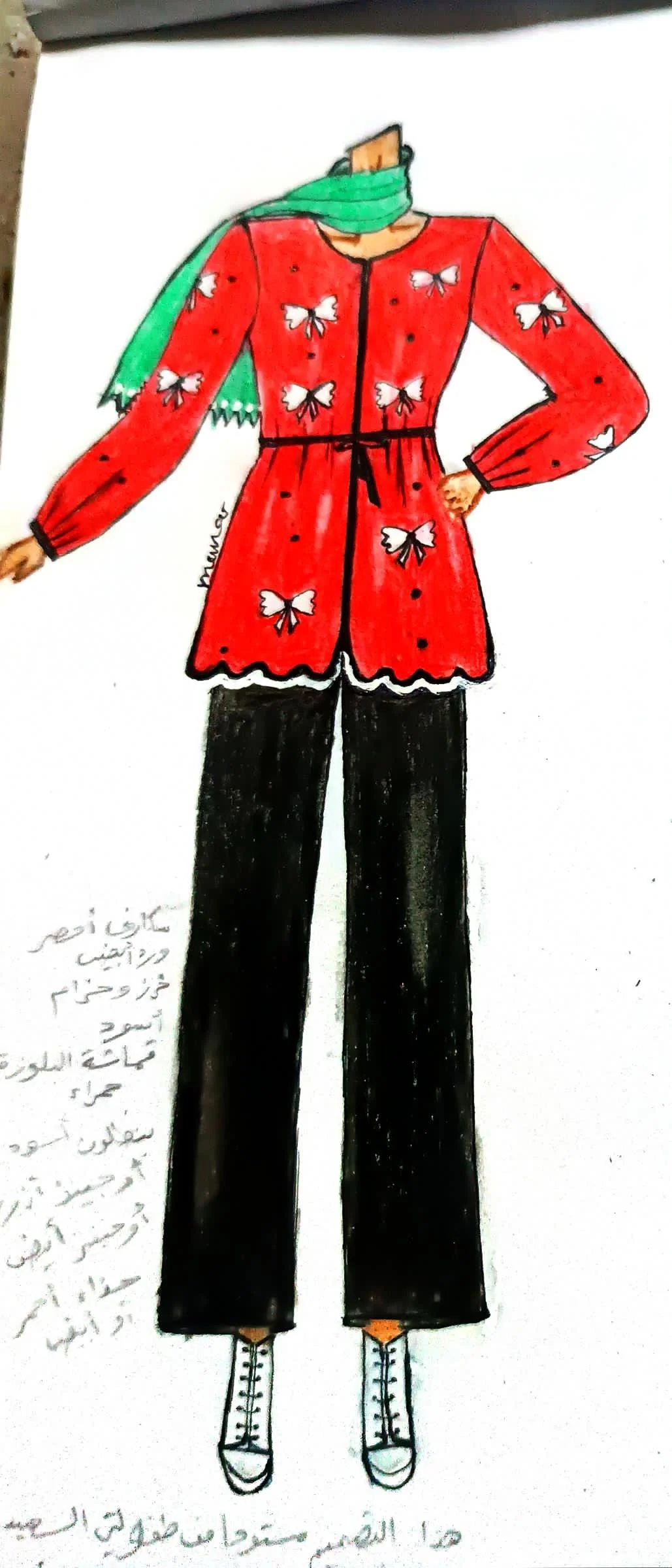
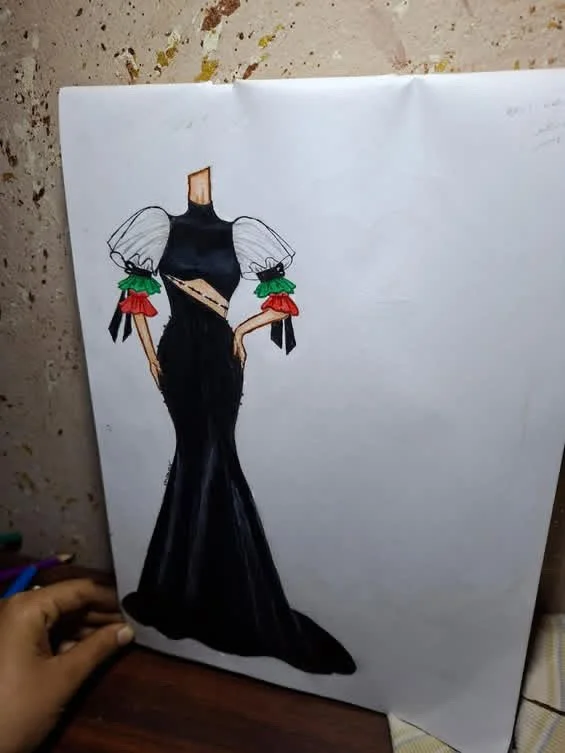
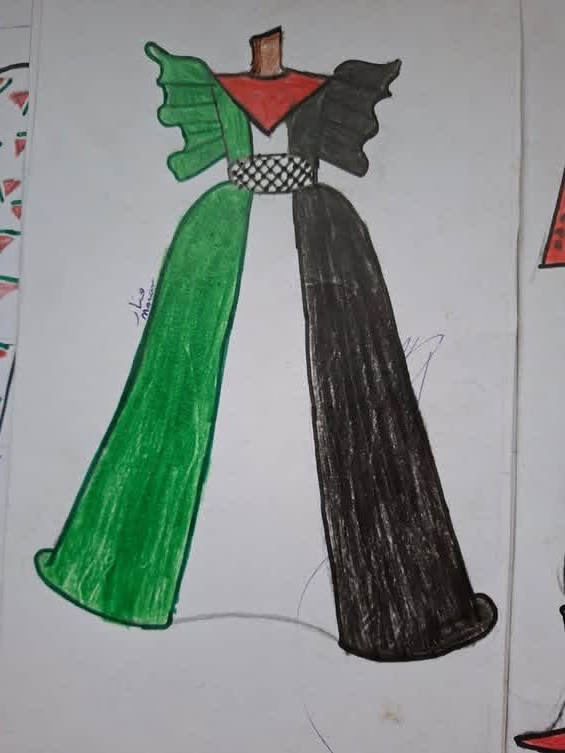
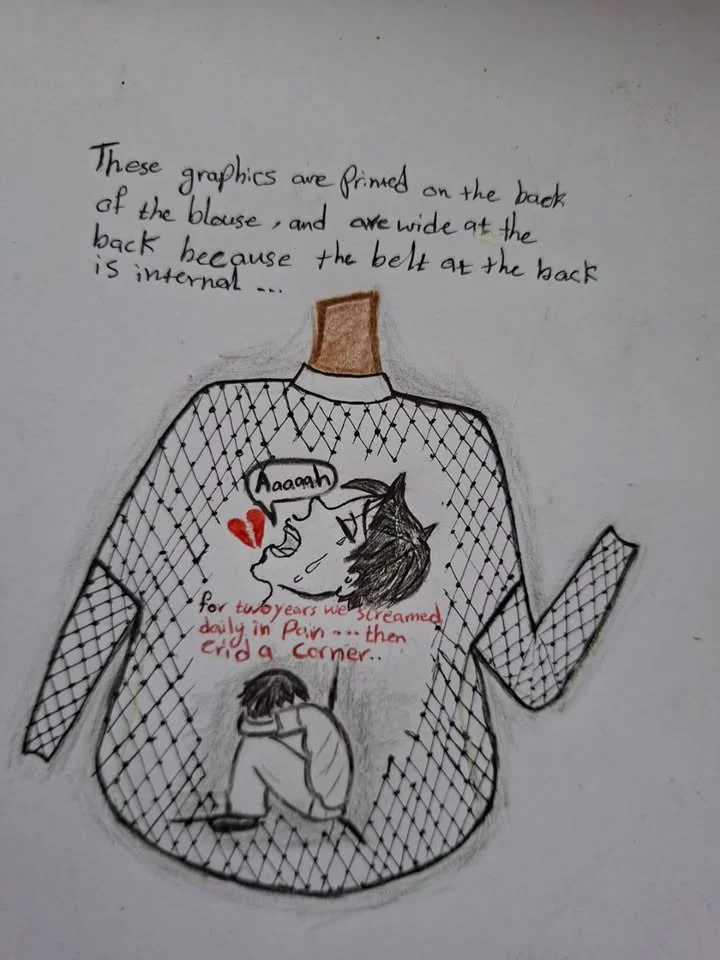
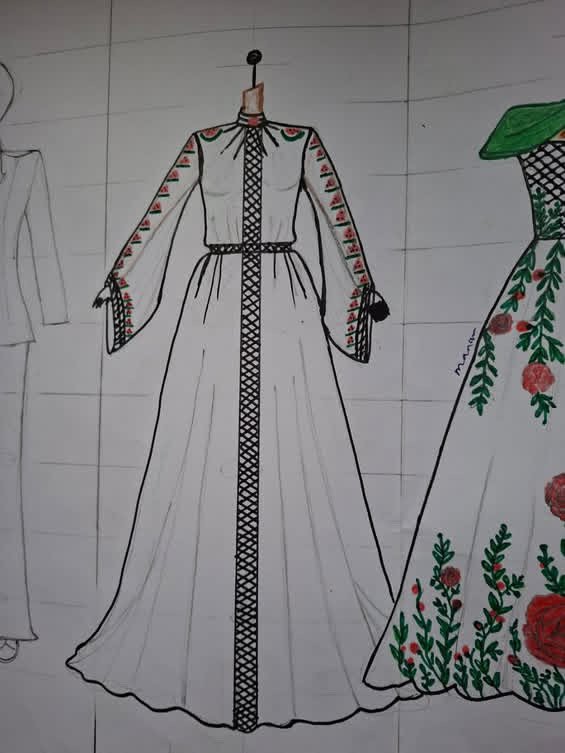
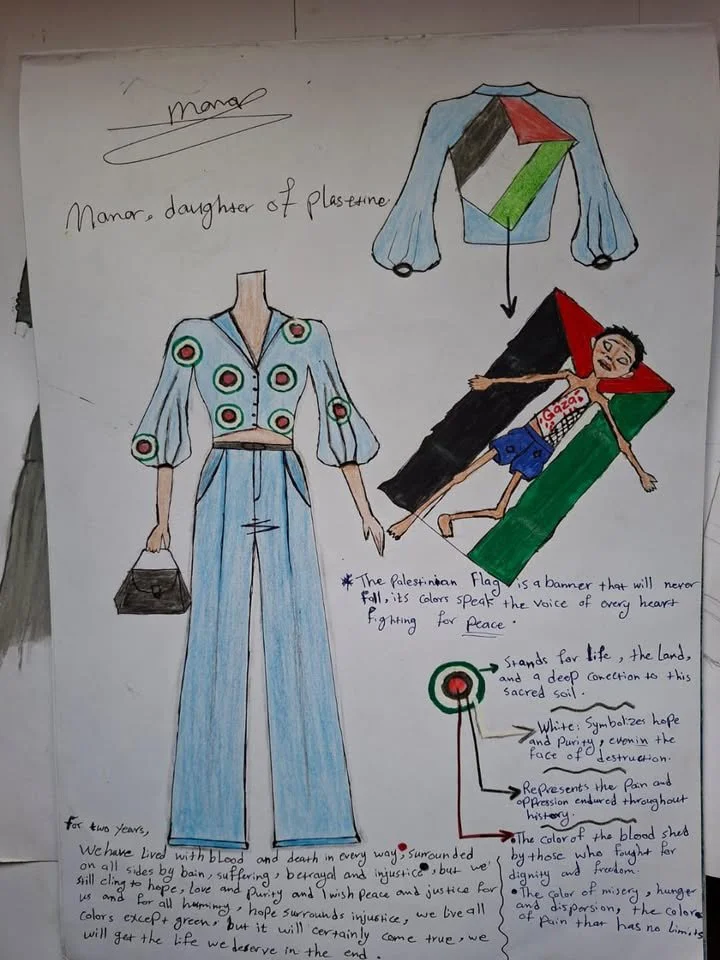
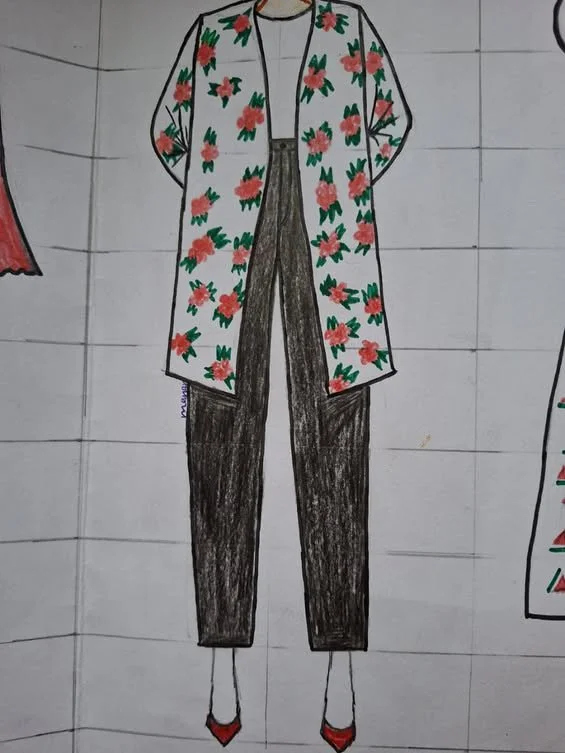
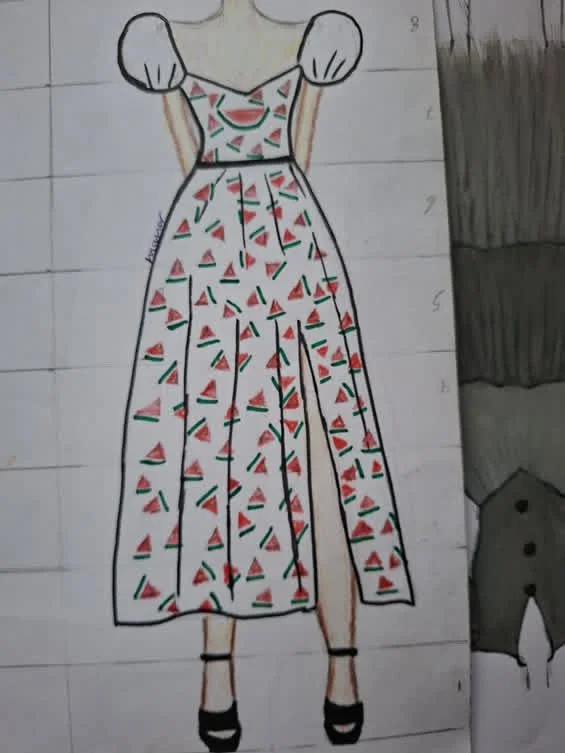
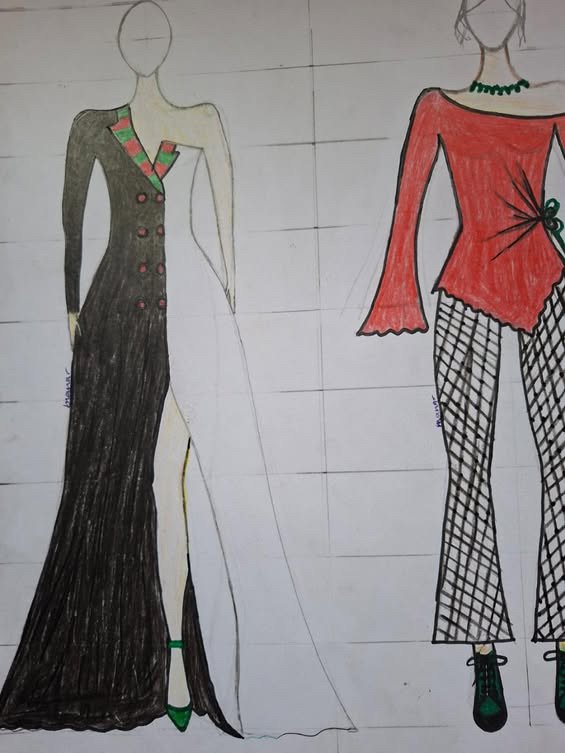
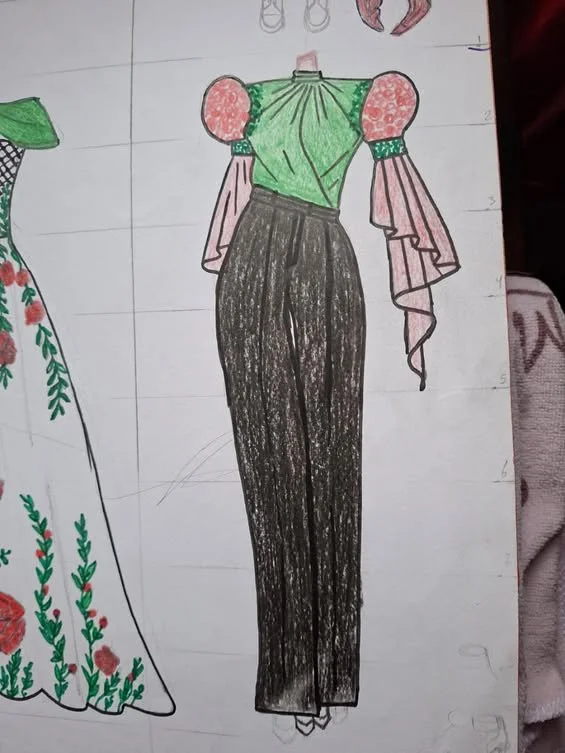
Standing with Manar and her family means helping them protect their future. Please consider donating to their GoFundMe campaign by clicking here: *🍉* below are designs by Manar. Help her realise her dream of becoming a fashion designer by donating to her GoFundMe linked above.
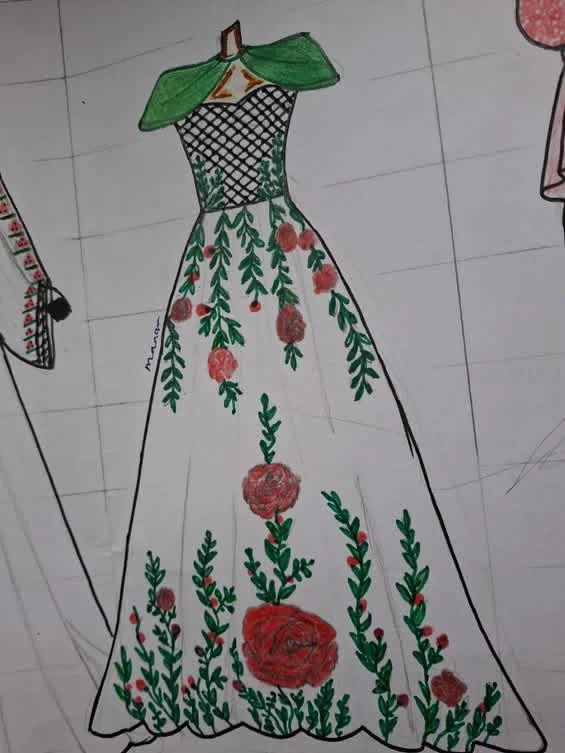
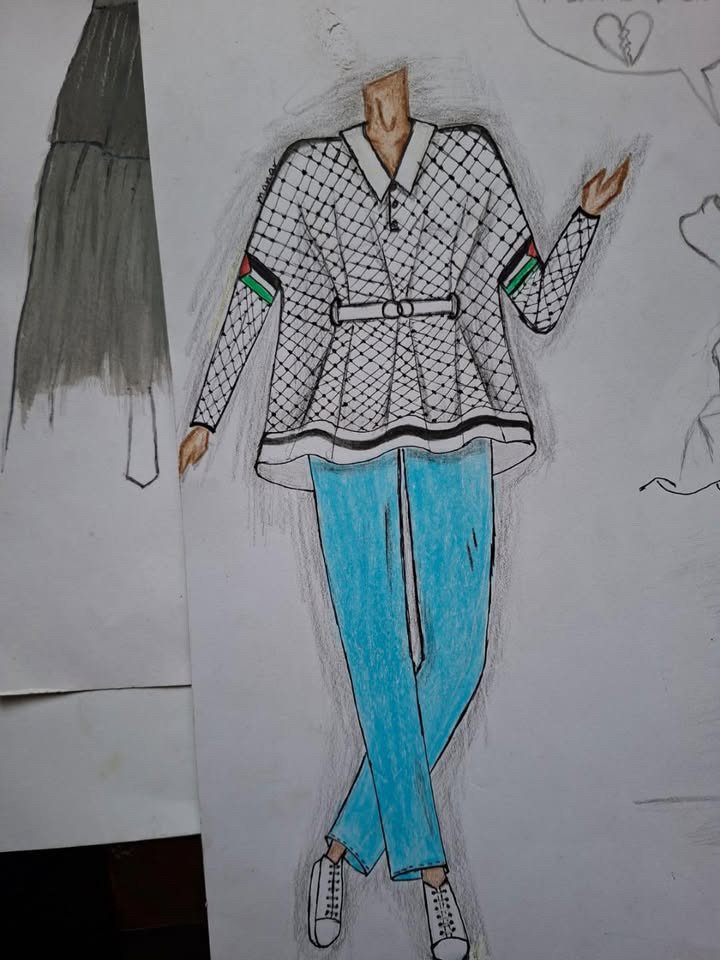
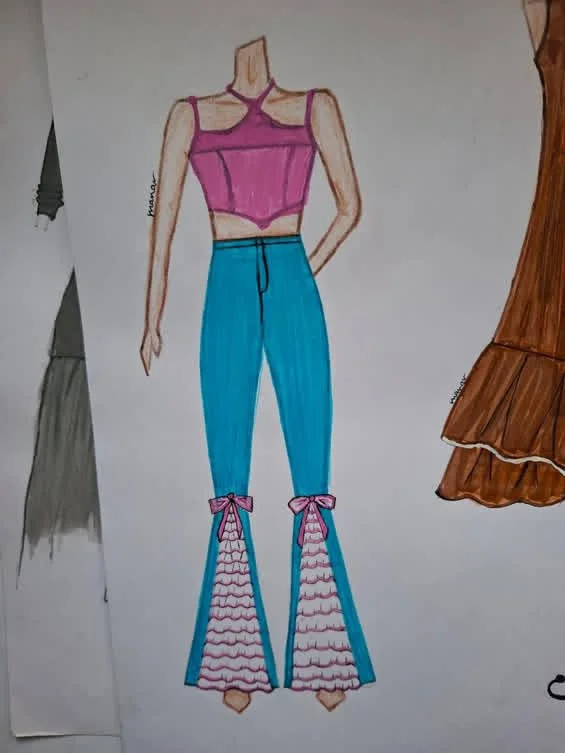
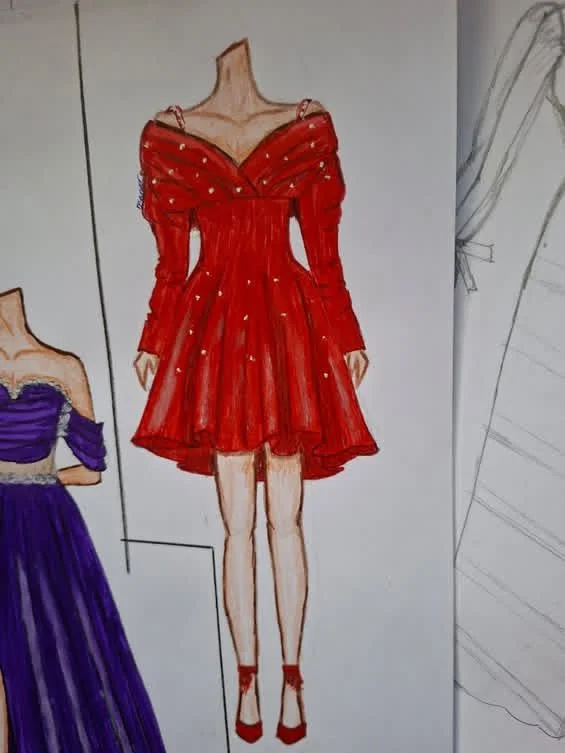
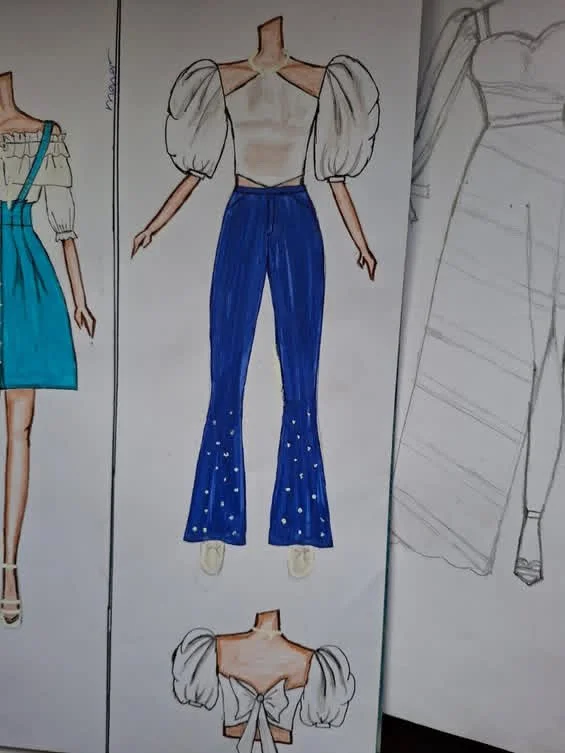
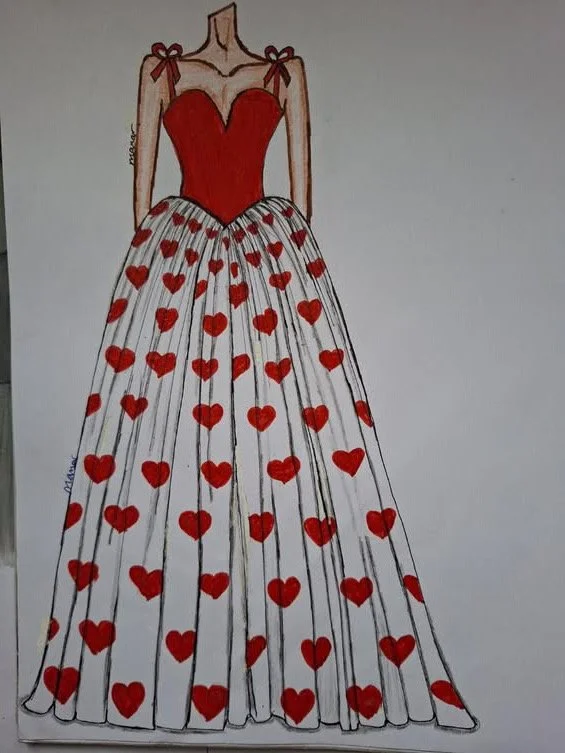
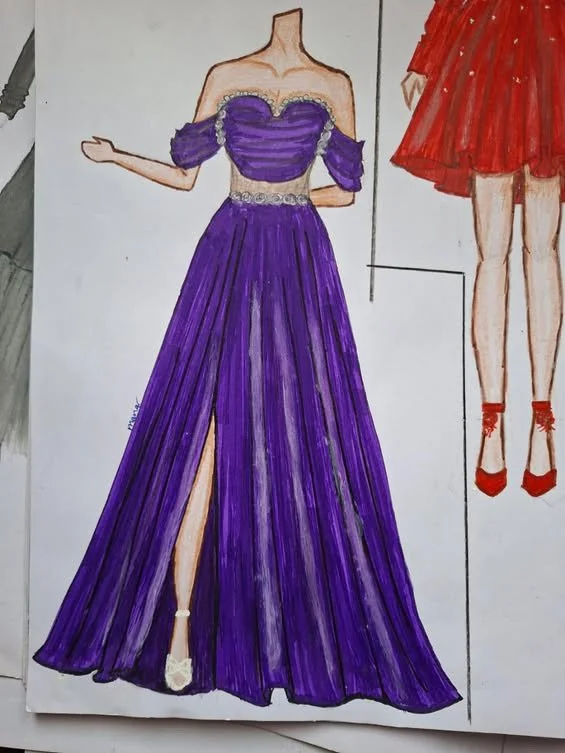
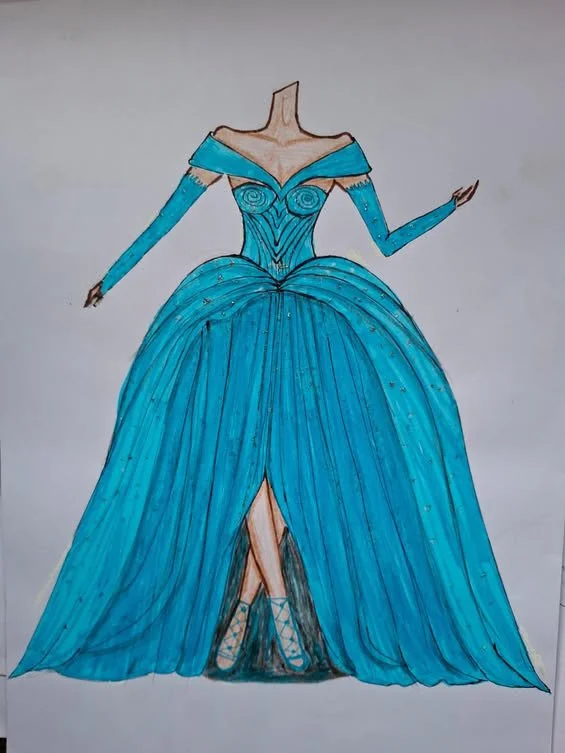
You worked in a lab before the genocide accelerated and took your home and livelihoods in 2023. How did your experiences professionally, academically or via life experience help you to survive in the destroyed conditions you’ve been living in for 2 and a half years?
My university studies didn't help me financially during this difficult period of my life. I wished I had a job with a stable salary, but my pre-war contract was temporary. With the start of this horrific genocide, I lost my job and my salary stopped. I couldn't even find anywhere to volunteer or practice my profession. However, my work in laboratories and my scientific expertise have given me so much in my life, especially regarding my health, the health of my children, my loved ones, and everyone around me. I've learned that the smallest details can make the difference between life and death, between making a mistake and surviving. They've given me a calm mind amidst the chaos and the ability to think under pressure when fear surrounded us from all sides.
My academic and professional life has taught me patience, discipline, and the belief that knowledge is a form of resistance. It has instilled in me a appreciation for work as a calling, not just a job, and as a means to serve others, even in the most dire circumstances. When our home was destroyed and I lost my livelihood in 2023, the values upon which I built myself did not crumble. I learned from life to adapt without losing my humanity, to rebuild myself responsibly when everything around me is destroyed, and to endure without hardening my heart.
Amidst the devastation, knowledge, faith, and awareness became tools for survival, no less vital than food and shelter. I am a product of experience, not a victim; I carry within me what war could not take, and I still believe that when a person preserves their essence, they can rise even from the rubble.
During this unbearably difficult time, you discovered your gifts as an artist, writer and designer. Thinking back now, did you see artistic talent in you as a young person? Did you like drawing, writing even then, for example?
From my early childhood in elementary school, I was naturally inclined to draw and design clothes for those around me. I found particular joy in reading books, writing, and contemplating God's creation. These small moments were a source of happiness and tranquility for me, without me realizing at the time that they were artistic talents or inclinations.
As I grew older, my excellence in mathematics and science led me to study science, then to many years of studying in secondary school and university, followed by marriage and raising children. Under the pressure of responsibilities, I gradually drifted away from drawing and writing, until I almost forgot my childhood itself and the joy and simplicity it had filled me with.
During the genocide, after losing our large house and garden, which were part of my memory, I felt a desperate need to recapture my former self and the memories of my childhood in our beloved home. Encouraged by my sister Elena, I returned to drawing not as a profession, but as a means of remembering; and to writing not as a skill I had mastered, but as a space for survival. I wasn't striving to become a gifted artist as much as I wanted to express my passion and love, and that quiet happiness that once resided within me and still tries to linger.
You have written about and depicted the plants and flowers you grew up around on your Grandfather’s farm, what is your happiest memory of this time of your life?
My happy childhood memories are many, including those moments when the whole family would gather—my uncles, aunts, and their children. We would all sit around the fire at my grandparents' house, prepare a communal dinner, eat sweets and nuts, and drink healthy beverages together. I can't describe my grandmother's joy at being with her children and grandchildren. I remember my delight at receiving a beautiful and special dress for Eid. Every Eid brought me immense happiness. The extended family would gather, prepare lunch and a barbecue for dinner together, and distribute money to everyone. During Eid, everyone is happy, regardless of their financial situation. I love sharing my happiness with those around me. I was extremely happy on my wedding day, my brothers' wedding days, the day my daughters were born, the day I graduated from university, the day my older brother graduated as a civil engineer, and the day I received my first paycheck.
You make clothes for your daughters, and have been very resourceful with materials you could find to do so during the genocide. Can you tell some of your memories of learning how to sew from your Auntie and Mother? Tell us about your Auntie’s boutique in Gaza, what kind of clothing did it sell?
My aunt was a sewing instructor at a vocational training center in Khan Younis, and many people learned sewing from her. My mother had a small sewing shop next to our house, and she sewed for everyone in our neighborhood. My aunt would visit our house every weekend, and they would discuss how to sew a new design each time. I would bring them tea and sit with them, learning from them. They loved hearing my opinion on many designs. I would tell them how I wanted my school uniform to be designed. My mother and aunt would buy fabric in the same color and style as my school uniform and sew it for me according to my chosen design. They would do the same for my cousin and my younger sister. We always wore distinctive and eye-catching uniforms to school. Every time, my teacher would tell me, "Take me to your mother; I want her to make school uniforms for my daughters." I would participate with my mother and aunt in designing and coordinating the clothes they sewed for customers, and I would apply what I learned from them by sewing elegant clothes and dresses for my dolls and my friends' dolls when we were children. I continued this even when I was in university. I designed a unique abaya, and my mother and aunt sewed it for me. I still keep it, even though it's quite old, because it's still beautiful and eye-catching to everyone who sees me wearing it...
You are hoping to study fashion design in the UK one day, are there any Palestinian or Islamic fashion designers you particularly admire?
Actually, I've been influenced by many trends and styles, more so than by any one designer. What attracts me to fashion design is how clothes can express a person's culture and identity, and how pieces can combine tradition and innovation. In this regard, I've always admired and been inspired by the Palestinian fashion designer Susan Tamimi.
Among the designers who have inspired me with their style of blending beauty and identity are:
Priyanka Swaraj– for her balance between contemporary style and heritage.
I'm also very interested in following the work of designer #Issa Lattouf# for his approach to combining culture and creativity.
What has inspired me most is seeing designers use fashion as a vehicle for cultural expression, something I aspire to work on in the future, especially in merging Palestinian identity with the global language of design.
"That's why I aspire to create my own style, one that combines the authenticity of Palestinian heritage by incorporating a symbol of my homeland and identity with contemporary London trends—expressing a cultural identity through fabrics, cuts, and details, and reminding everyone who sees my designs that Palestine exists and will not be erased."
What colors, textures, fabrics, shapes do you feel encapsulate your style as a designer?
I prefer to use all types of fabrics depending on the design, its occasion, and the surrounding weather. I also use all colors; I love diversity, distinction, and innovation. However, currently, under the great injustice we are experiencing, I simply want to use the colors of my national flag so that every design I create carries a powerful message: reminding people that Palestine will not be erased or forgotten. Palestine will resist by all means until we achieve our freedom. Our occupying enemy, the thief of my land, made a mistake when they decided to steal Palestine and make it their homeland. Simply put, it is impossible for them to succeed in this. For 72 years, they have failed to erase Palestine, and they never will. I see using the colors of my country in my designs as a duty and the least I can offer my beloved homeland.
In the exhibition Weaving an Axis of Resilience: Manar, Daughter of Palestine your designs were realized and exhibited - how did it make you feel to see your designs come to life, but to not be able to touch them and be there?
I saw my sister, the artist Elena, very busy and stressed at this exhibition, trying to finish my designs on time. I wished many times that I could be by her side, communicating with the wonderful seamstresses and explaining my designs to them in more detail. They were all a remarkable team, working with such love to support me. My happiness at this exhibition was indescribable. The support, appreciation, and concern people showed for my experiences and my pain made me feel blessed and knew that my Creator loves me. However, it was a joy mixed with sadness and a pang of sorrow because I couldn't guide them on the details of my designs, nor could I find the right fabric for my designs, or even welcome the guests who support me and the Palestinian cause. All my words fail me, and I can't express my gratitude, love, and appreciation for everyone who cared about me and my designs. I will never forget the Weaving the Axis of Resilience exhibition.
Regarding this exhibition, did you have a favorite piece that was made from your designs, and why was it your favourite?
Everyone worked incredibly hard and energetically, and every piece was beautiful. Everyone did an amazing job, and I couldn't choose. Likewise, I drew all my designs at night by small light, hungry and terrified by the bombing, with a heart trying to cling to hope and life. They all tell of my great pain and my love for life.
What designs do you have that haven't been made yet, and which ones would you love to see brought to life by a seamstress?
I have many beautiful designs that haven't been made yet, and I don't think I can make them while living in Gaza because of the tragic circumstances we're experiencing. There's no fabric, no electricity, and no tools.
Words: Manar S. Abu AmraDesigns and artwork: Manar S. Abu AmraInterview: Elina Margot, Axis of Resilience@manardaughterofpalestine @hoor.2304 @axisofresilienceStanding with Manar and her family means helping them protect their future. Please consider donating to their GoFundMe campaign by clicking here: *🍉*