Reflections of a Disjointed World
Anastasia Grieg’s life in paintings
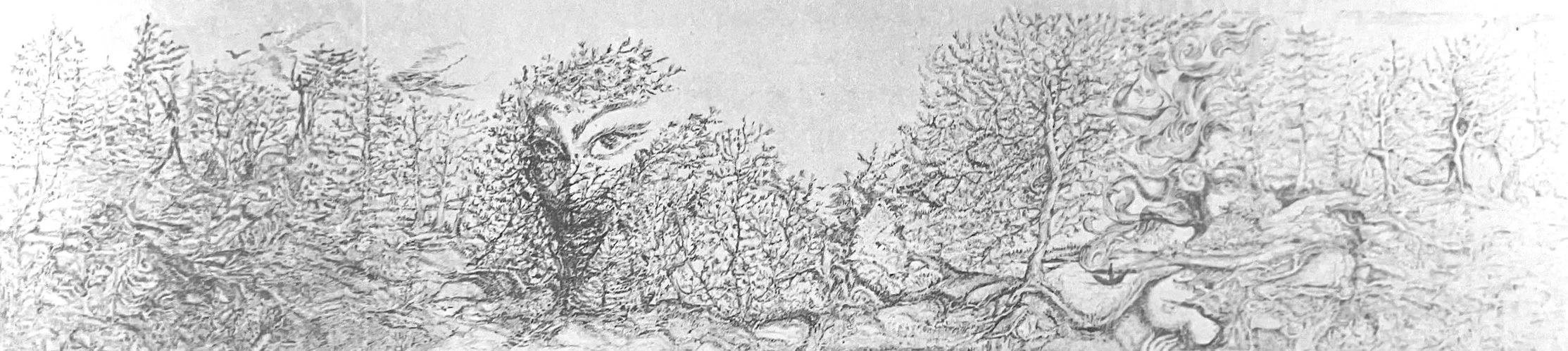
Impressions of Kaholmen, 1981
Anastasia Grieg, born Anastasia Chassay in Oslo in 1923, had early dreams of being a dancer. Awarded a scholarship by Queen Maud of Norway, she was sent to the prestigious Russian Ballet School in Paris. During the 1930s she was a soloist under the direction of Jean Cocteau at the De Basil Ballet (later Bal de Monte Carlo.) When the Second World War broke out, she returned to Norway. Arrested in 1942 by the Gestapo, the young Anastasia was sent to a concentration camp. In 1944, managing to reach Switzerland in hopes of a new beginning in a refugee camp, she was graced by Norwegian students who helped her contact officials, granting her a new beginning. Throughout her life, Grieg kept these atrocious experiences to herself. Her career as a ballerina never resumed and though her body never rejoined the thrills of dancing steps, a new route emerged from within herself; one which allowed her to heal and to give thanks to those who saved her, uniting the world through an altogether different kind of movement: the grand power of solidarity. In all her grief came artistic resuscitation and Anastasia Grieg’s path led her to becoming a prodigious artist, adamant on keeping a testimonial value within her work.
Animated by a reconnection with drawing, which she had loved as a young child, she pursued her gifts in French art schools in Nice and Paris, taught by Henri Matisse and André Lothe, later attending the prestigious Hayters Academy. Sprouting from within these worlds, she became greatly emotionally affected by the consequences of the Algerian War. In the 1950s, she took on a position as an assistant nurse in the Algerian mountains. In a trademark effort to heal and mend from witnessing atrocities again within her lifetime, she took to painting these scenes; a way to immortalise the souls encountered and canonise the horrors in hope of a universal understanding. It was following these experiences that Anastasia chose to continually be on the move, forever travelling to communicate and unify different experiences, materialising the worry she carried for humanity. Her restlessness unceasingly seasoning her impressive abundance.
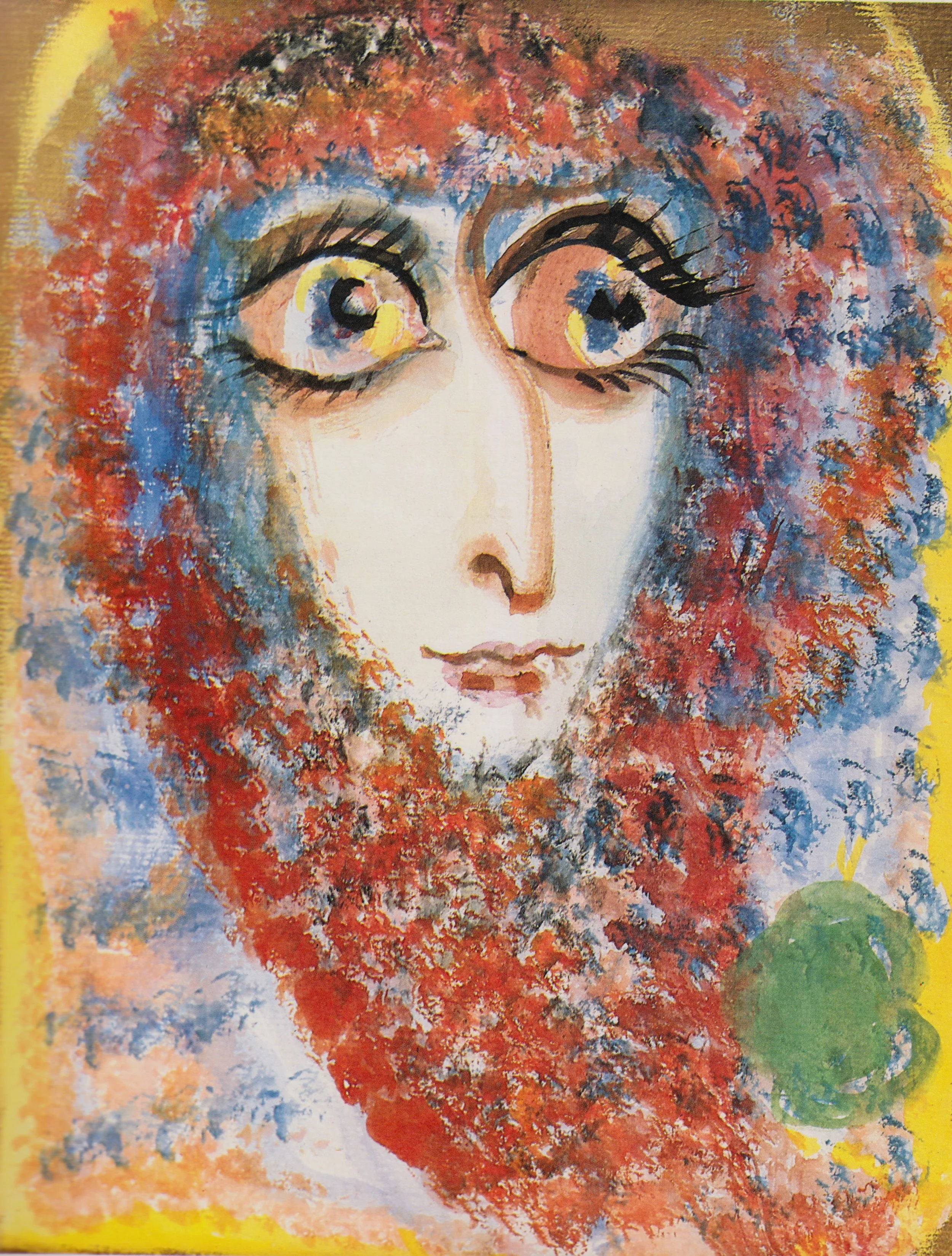
Study of Icon, 1979
In the catalog accompanying the 1988 exhibition Anastasia Grieg: Los Ojos de Una Vida, presented at El Museo Estudio Diego Rivera y Frida Kahlo, the then director Blanca Garduño describes the paintings of the Norwegian artist as “patient compositions.” In allusion to the horrors of her early life, Garduño additionally highlights her work as sparking from the people the artist encountered in her lifetime, “in them [her paintings] she faces with great moral strength her experiences and adopts an optimistic attitude instead.” It is indeed with endurance that the palpable nature of the fertility of her ideas that lay between conscious coping, curative feelings and imagination finally assembled. Her husband, John Grieg, ambassador to the Kingdom of Norway in Mexico during the time of this posthumous exhibition, dedicates this display of her works “To The Memory of Anastasia Grieg.” It is here that we understand the poignancy of the double-edged symbolism of this ode to his wife: in remembrance of all that shaped her, and in memory of the beautiful person she evidently was.
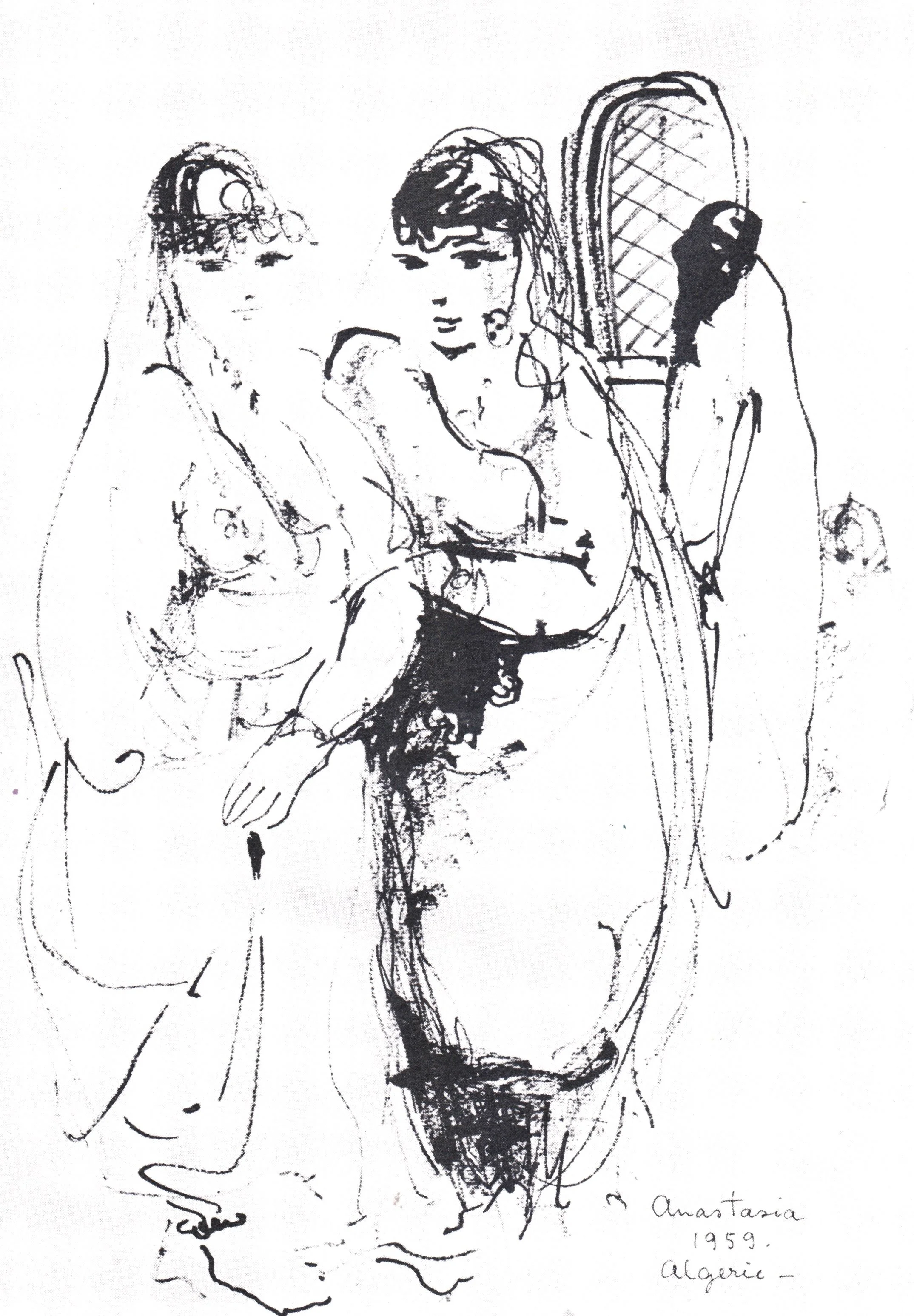
Women in Interior, 1959
Narrations of her artistic trajectory consistently underline the various changes she underwent: from respecting the trending styles in Nice and Paris at the time, to dabbling in Surrealist themes, murals and abstract art, Anastasia Grieg’s mercurial changes in output read as an adaptation to the parts of humanity she cared about, “and one occasionally senses an urge to put things in a ritual and mystical context.” (Fredrikstad Blad, 3/6/1981) Distinct phases in her life mirror the style with which she understood events and the artistic traditions in the places she moved to, which then characterised her rich visual journey. Supplementary to the mobility of the styles she shifts from, a great openness transpires from her chosen materials. “I use matches and felt-tip pens for my drawings. Sometimes also a toothbrush.” (Telemark Arbelderblad Skien, 09/12/72) As well as peppering her work with a strong sense of unity, hope springs from the artist’s radiant humour. “Recently I became the first person in 67 years to be allowed to draw in the Houses of Parliament in London. Here I had my own office in the basement under Big Ben and worked there for two months. I painted and drew angry British politicians.” Though these portraits have not yet been located by the present writer, one can only imagine the domesticated innocence with which Grieg chose to copy the less temperate demeanour of this band of humans.
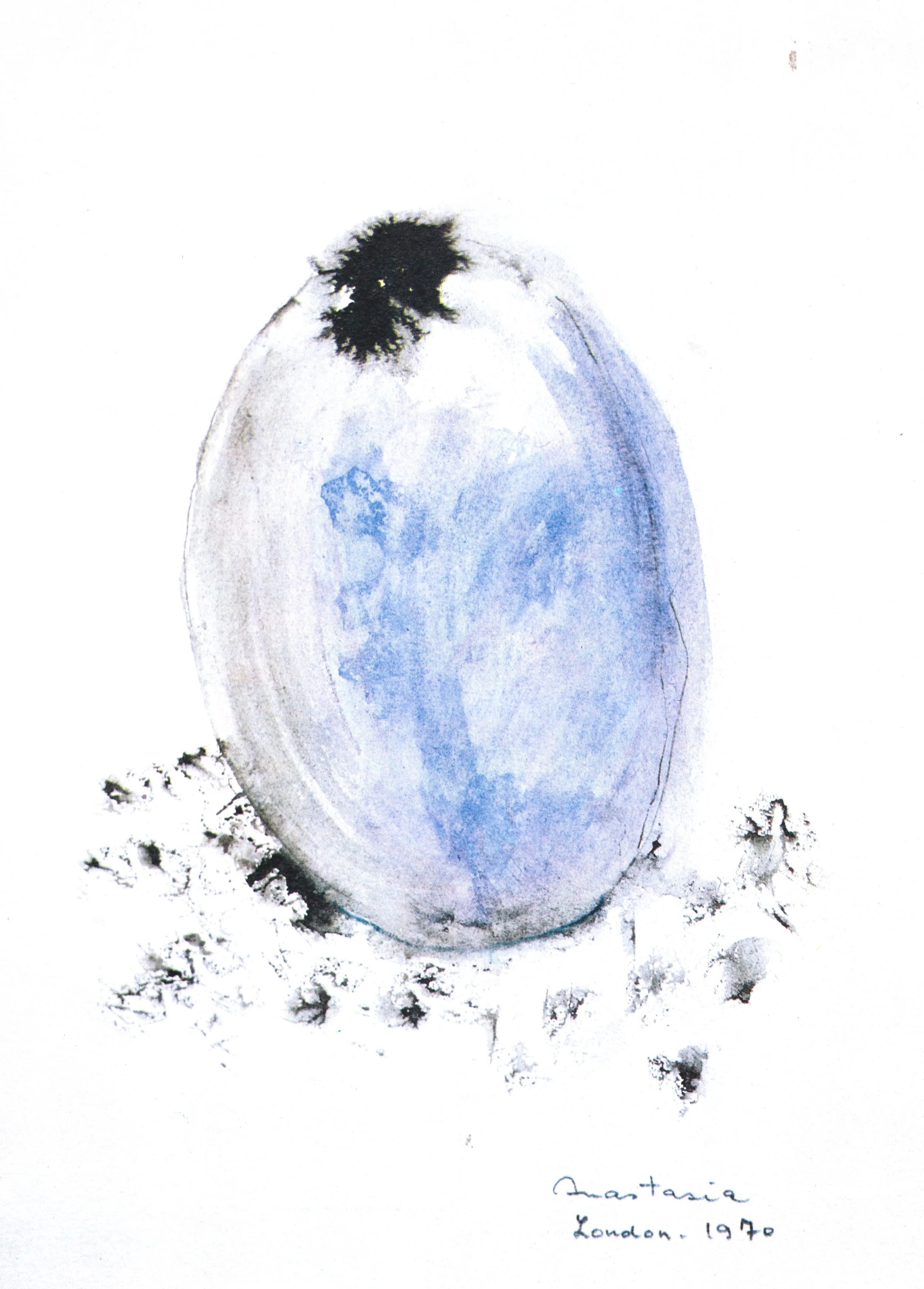
Beginning, 1970
“It is important to consider the importance Anastasia gave to the eyes of the models (real or imaginary.)” Santiago Espinosa de los Monteros, in Anastasia Grieg: The Eyes of a Lifetime, chose the organ of sight as the focal point in her work, “sometimes only the eyes exist.” As instruments that grant vision, the eyes are body parts that are, when accessible, alert to life. On one hand, a clear portrayal of eyes winks towards clairvoyance, another interpretation crystallises eyeballs as doorways to wisdom, and lastly, the eyes suggest the potential of foresight. This helps us lean closer to the endurance of her artistic directive as her canvases presented a version of a reality she witnessed. She ossified the potential to conceptualize the difficult nature of the scene, whilst offering a more uniting outcome. The eye contact presented in her ink illustrations of women in Algeria during a trialling war, for example, corporealised their existence. Movement is perceptible, and the imminent sense of their departure from our orbit is unmistakable. Grieg preferred not to draw directly from models, she wanted the subject to live and evolve in the corridors of her mind first before letting it reach a new form on paper or canvas. Additionally, she chose not to explain her pieces, claiming “it is up to you to find out what you see in my work.” Her crucial need to immortalise challenging or life-changing situations she herself witnessed then become part of the audience’s life reality, injecting it with gentle optimism. Seeing was indeed an omnipresent theme in her lifetime, as a few articles in Norwegian press published during the winter of 1972 speak of an auction of work with the aim of raising funds to donate to a charity aiding visually impaired children. Articles featured in Porsgrunns Dagblad, Telemark Arbeiderblad and Varden Onsday underline her effortless grace, expressing her illuminating techniques: “She has created works where the blind can actually feel their way into the painting,” allowing them tactile sight of the scenes in her paintings. By combining various sources that sealed her kind presence on the artistic landscape, it is inevitable that certain signatures of the artist capture the differing attention of viewers, granting them access to the painter’s clear intention to link humanity through the palpable energies of her oeuvre, which “stands out before our eyes today.” (Santiago Espinosa de los Monteros: Anastasia Grieg: The Eyes of A Lifetime )
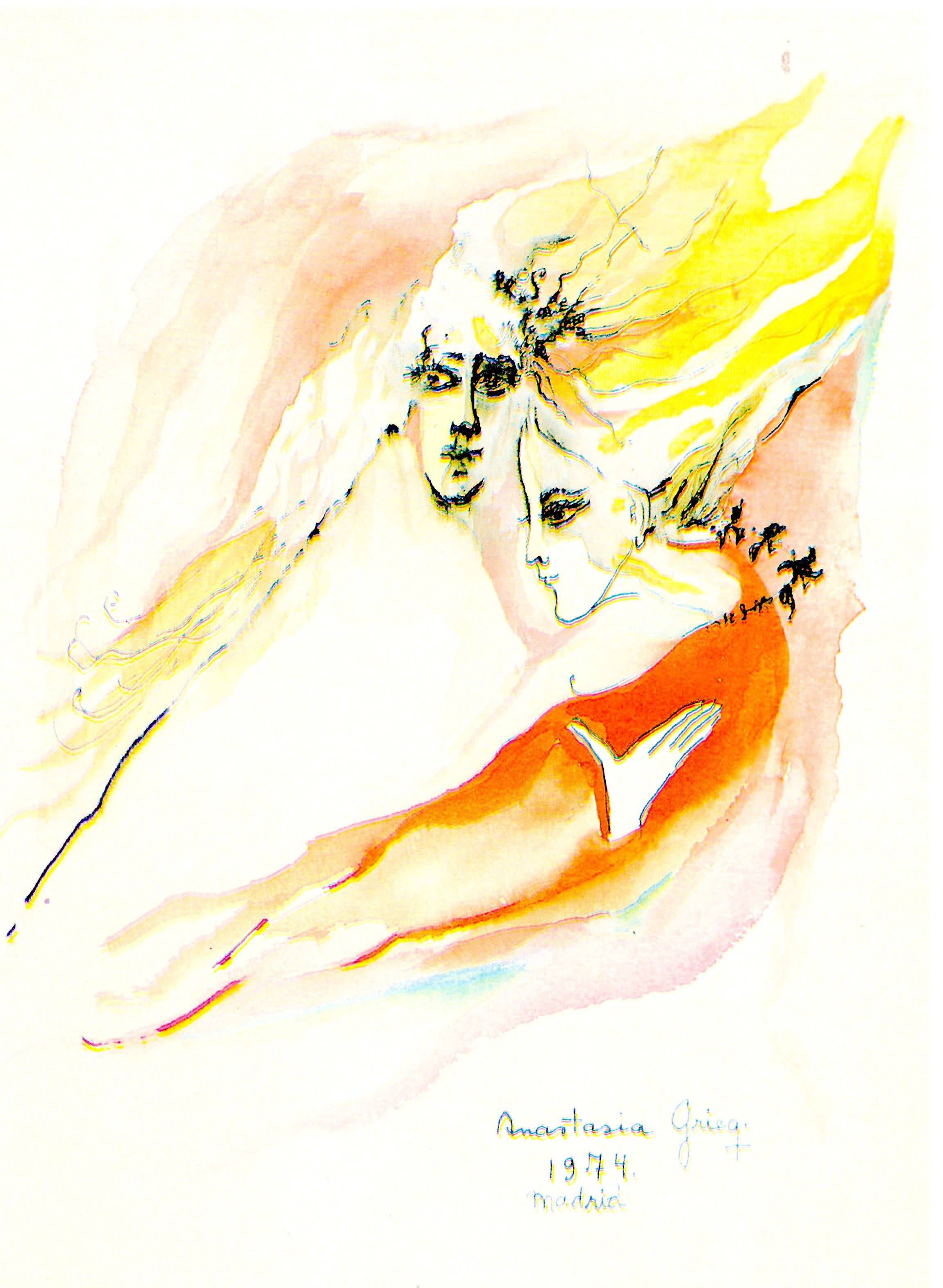
Two Women and Hand, 1974
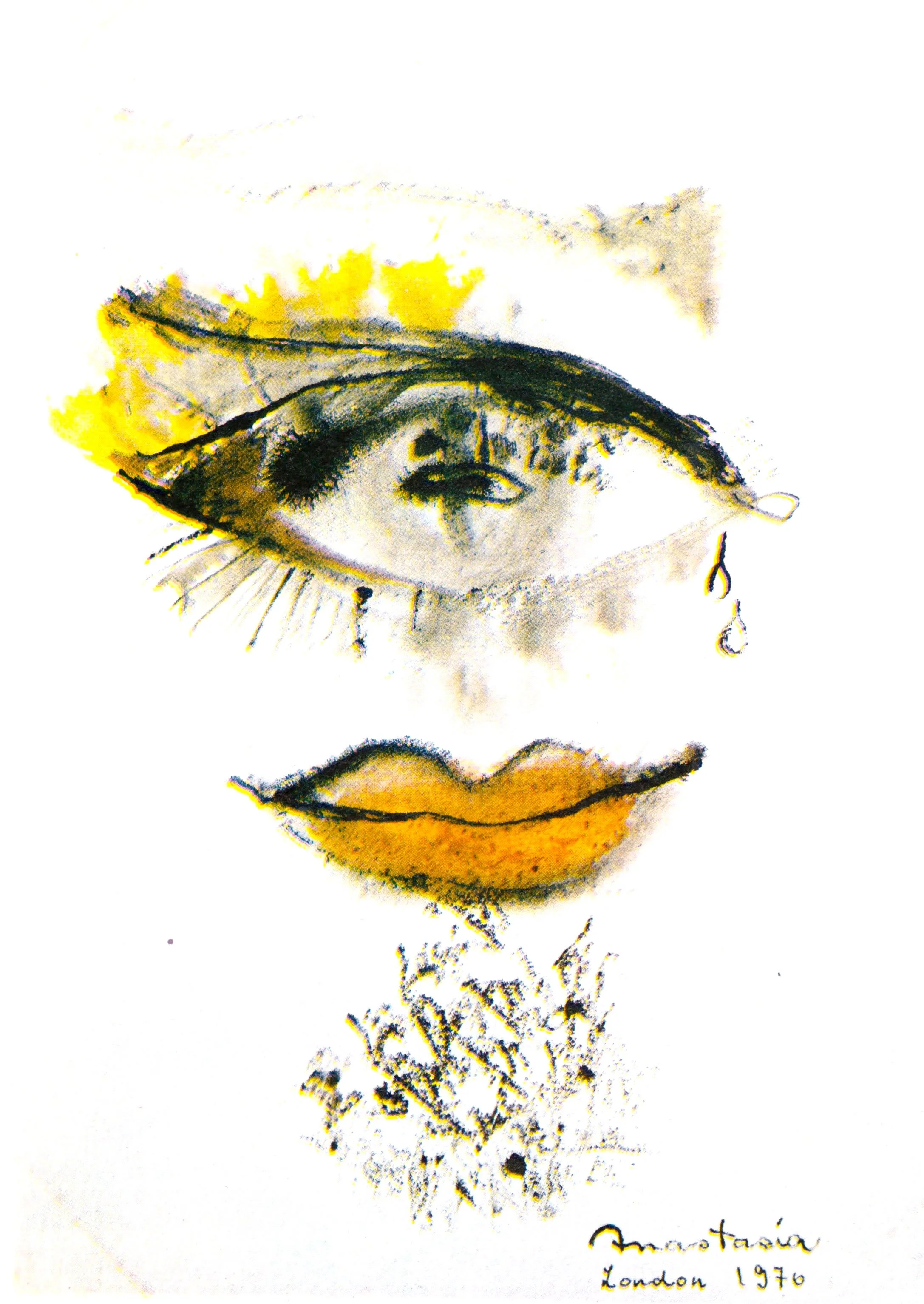
Kiss, 1970
Encouraged by Gallery D40’s assertion that though little information has been found about the artist, her motifs scream her intentions, we took to trying to locate people who owned parts of her in their personal collection. It is often the general public’s response to art that drives the visceral understanding of it, where, oftentimes, a limited knowledge of the cultural context offers visual sanctum and solace instead. The shining capabilities of art radiates in a testimonial recounted by Rebecca Fletcher, the artist behind jewellery brand Jawbone & Honey, who serendipitously came to own a collection of samples of work by Anastasia Grieg. In short, the beautiful story of Fletcher and her discovery of Grieg is held by a third person, “my very first customer when I started making jewelry. She was an eccentric. I loved her and was eternally grateful for her giving me a chance to make a few pieces for her.” After her passing, Fletcher attended her estate sale, hoping to purchase a memento tying them together eternally. Everything was unaffordable, until she stumbled upon the samples of the work by Anastasia Grieg. The work was created during the artist’s stay in London. In a descriptive letter enclosed in the collection of works, Grieg contextualises her pieces:
“These silk screen prints have been created during the last three years (1967-70) but they have within them threads that go all the way back to my childhood. Their direct inspiration has been my contact with the rootless young people of cosmopolitan London. In the meeting of cultures between many unlikely groups - particularly young people with foreign backgrounds - I have perhaps relived something of my own life as well as found the reflection of our own disjointed world. [...] It is their longing, their pain, and the occasional glimpses of hope that I have tried to express - their first uncertain steps in the difficult dance of life.”
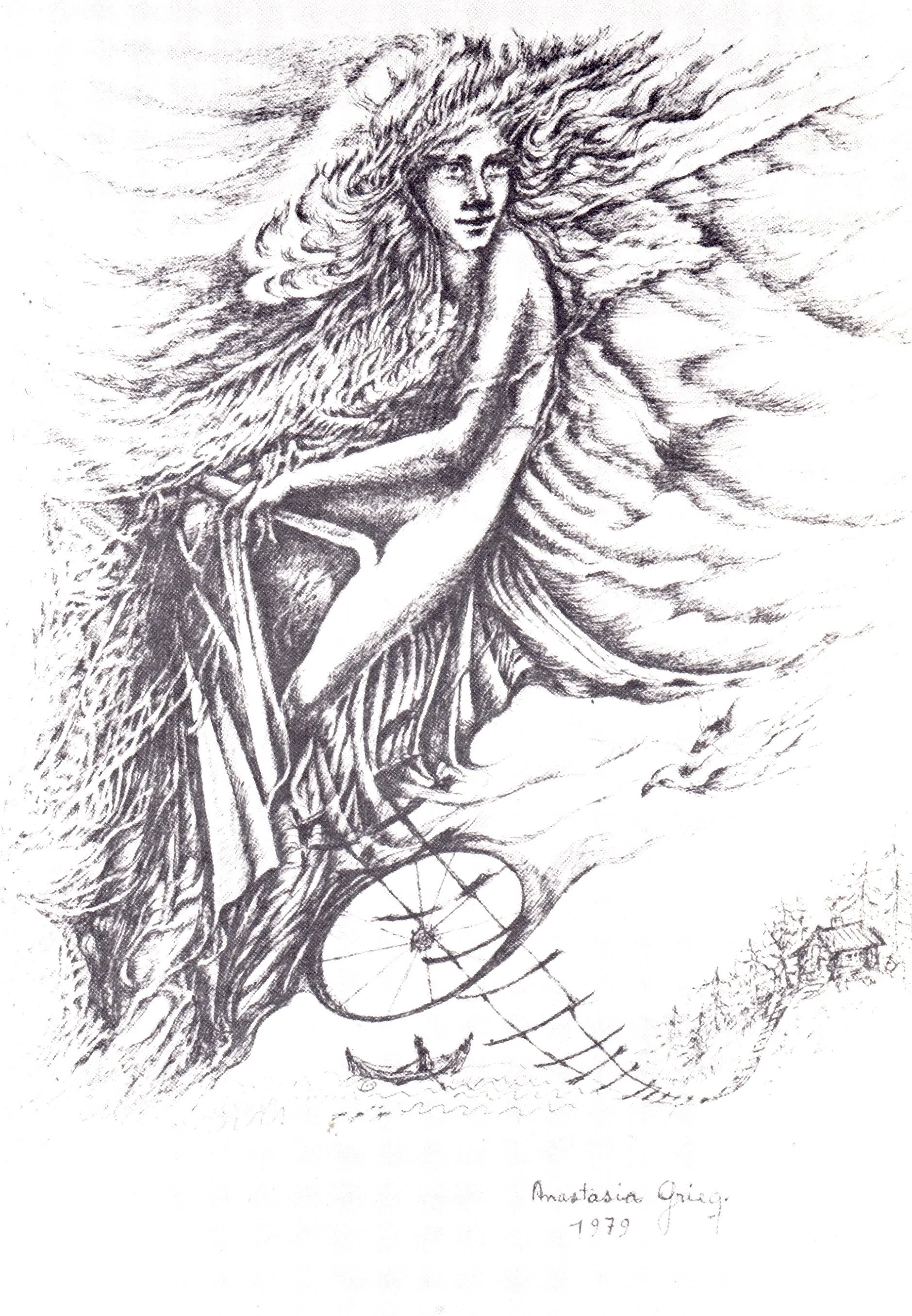
Bicycle Ride, 1979
From within the explanations hiding in this collection of prints, Grieg’s words jump out:
“It has struck me that long hair has often become a means of hiding naked nerves from a cold, uncomprehending world.”
When asked about the preciousness of the work beyond the presence of her early customer, Fletcher acknowledges being drawn to the power of the women depicted in the prints. The softness of the images and the lawlessness of their hair; the figures follow rules of their own as inspiring individuality flows from their manes. The jewellery artist elucidated on her own complex past with hair: with her mother being a hairstylist, it took years to bypass complex discords between women and their hair in order to accept the power and freedom of the immeasurably liberating and indomitable force that it is. She ends her email with the wisest, most generous words:
“Anastasia was representing women she saw, was a part of, a timeframe, a culture, possibly a rebellion. Bev, the woman who passed, she supported women and art and whatever they dared to be. She was a career woman in the 60's on through the decades. Making her way and stamping out her path of soft, bold, feminine voices in art in a small rural town in Pennsylvania. Now the set rests in my hands; a woman and mother, a jewelry creative, trying to show my daughter that God has given us a voice to use for love and justice. To show women and girls they are valuable. That art can heal, it doesn't have to be traditional to matter, it just needs to be something from the heart.”
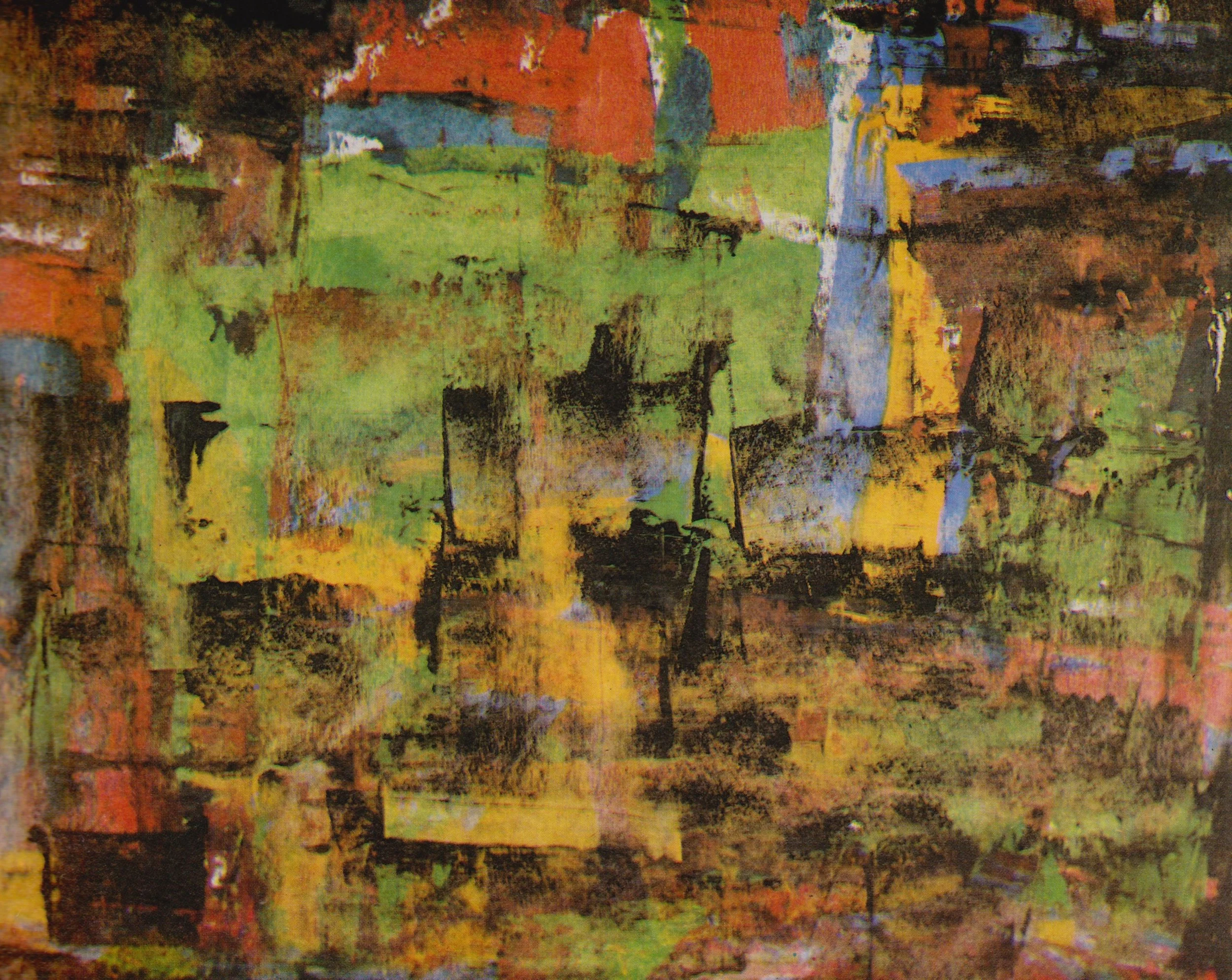
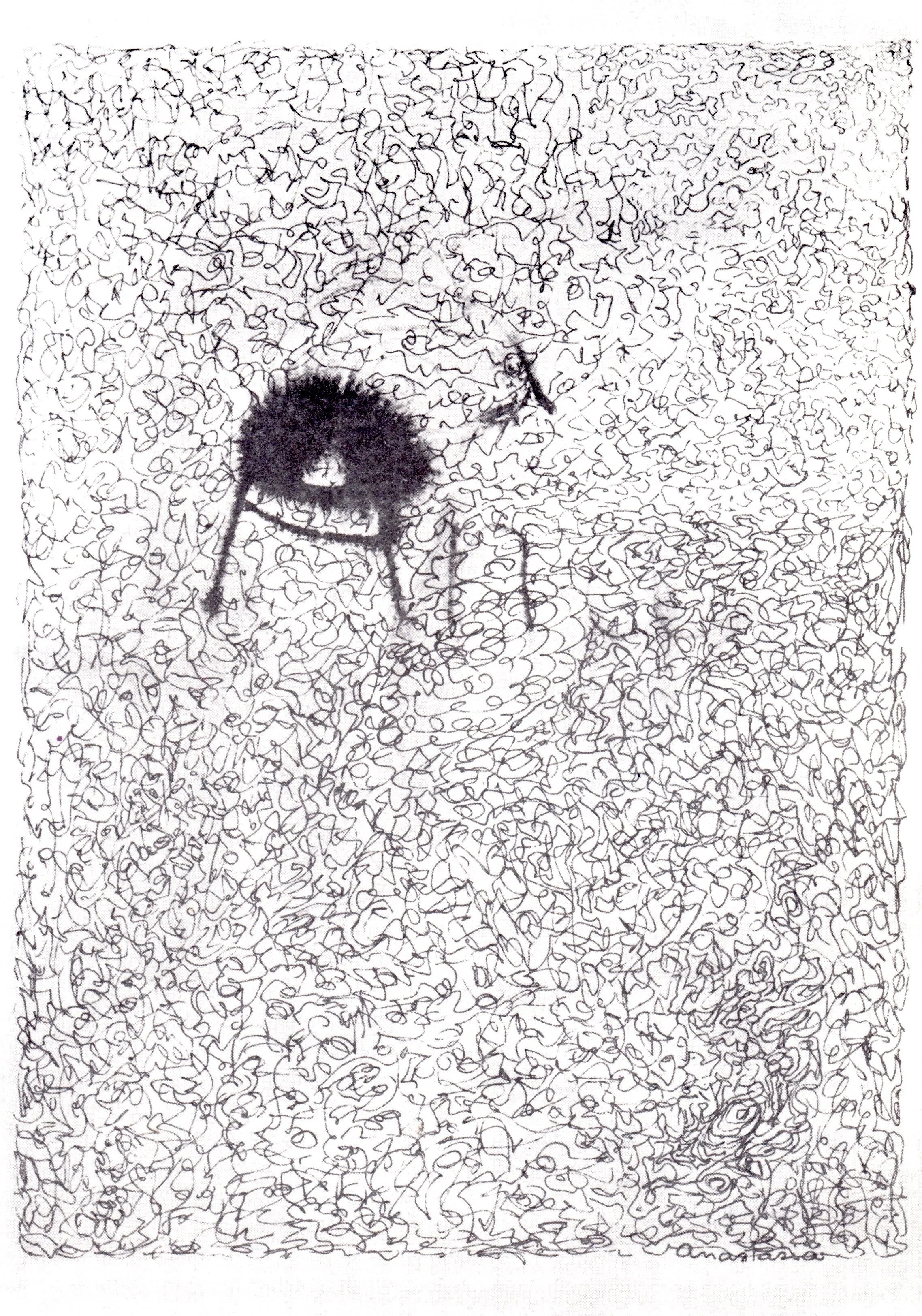
Green Abstract, 1985
Signs, 1958
The striking freedom within the corporal reality offered by her soft spectacles offer unconscious liberation. And so, with eyes and hair and much more of the humanity of the world felt by and known to the artist, viewers link and meet with the infamous hope Anastasia Grieg stubbornly infused into every one of her artworks. Her output was once hugely celebrated but a lack of permanent championing has clouded her legacy. Should you stumble upon a piece of hers, it almost certainly means she’s made herself available to you; watching, connecting and braiding her various languages into your new strengths.
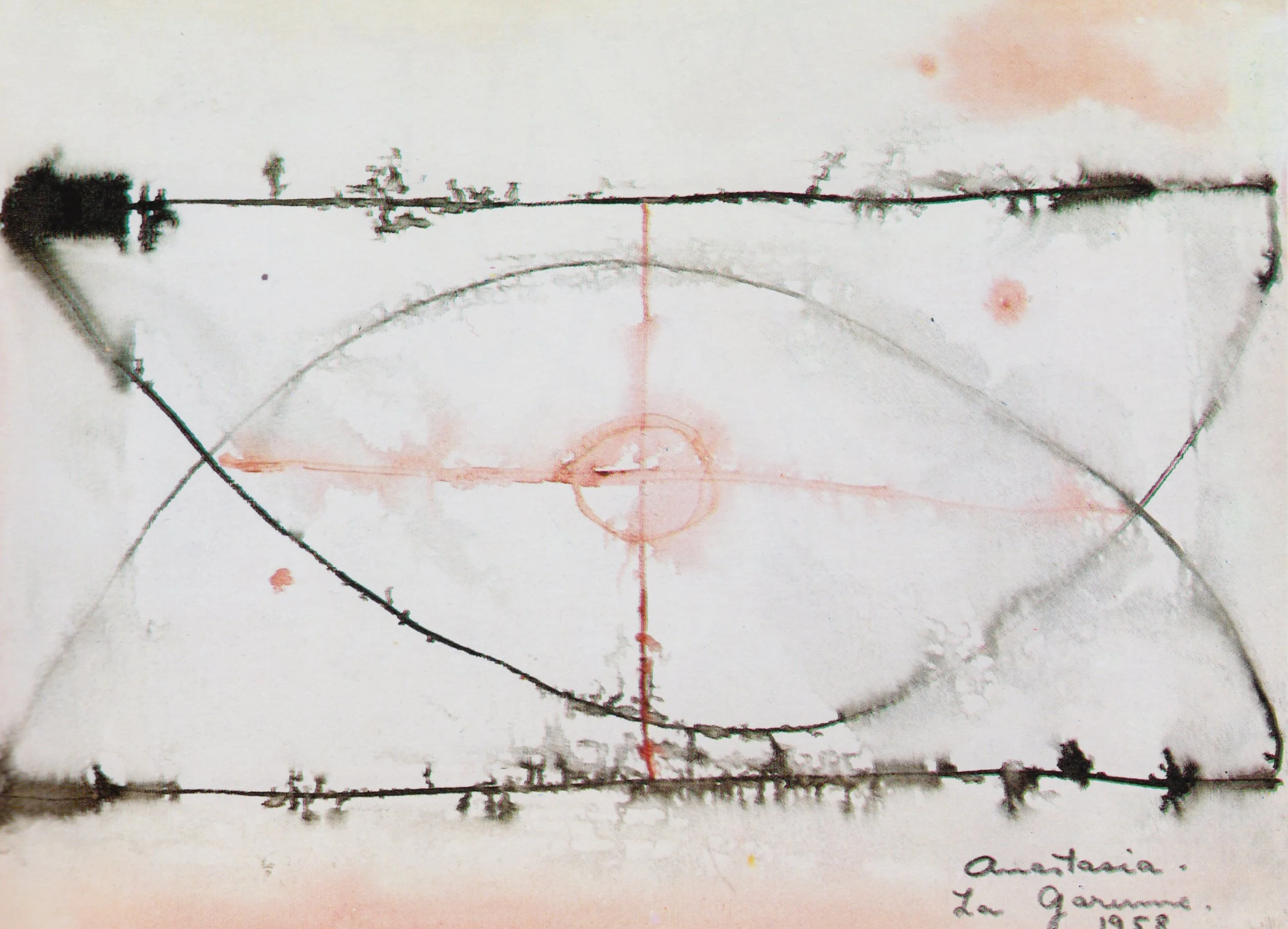
Space, 1958
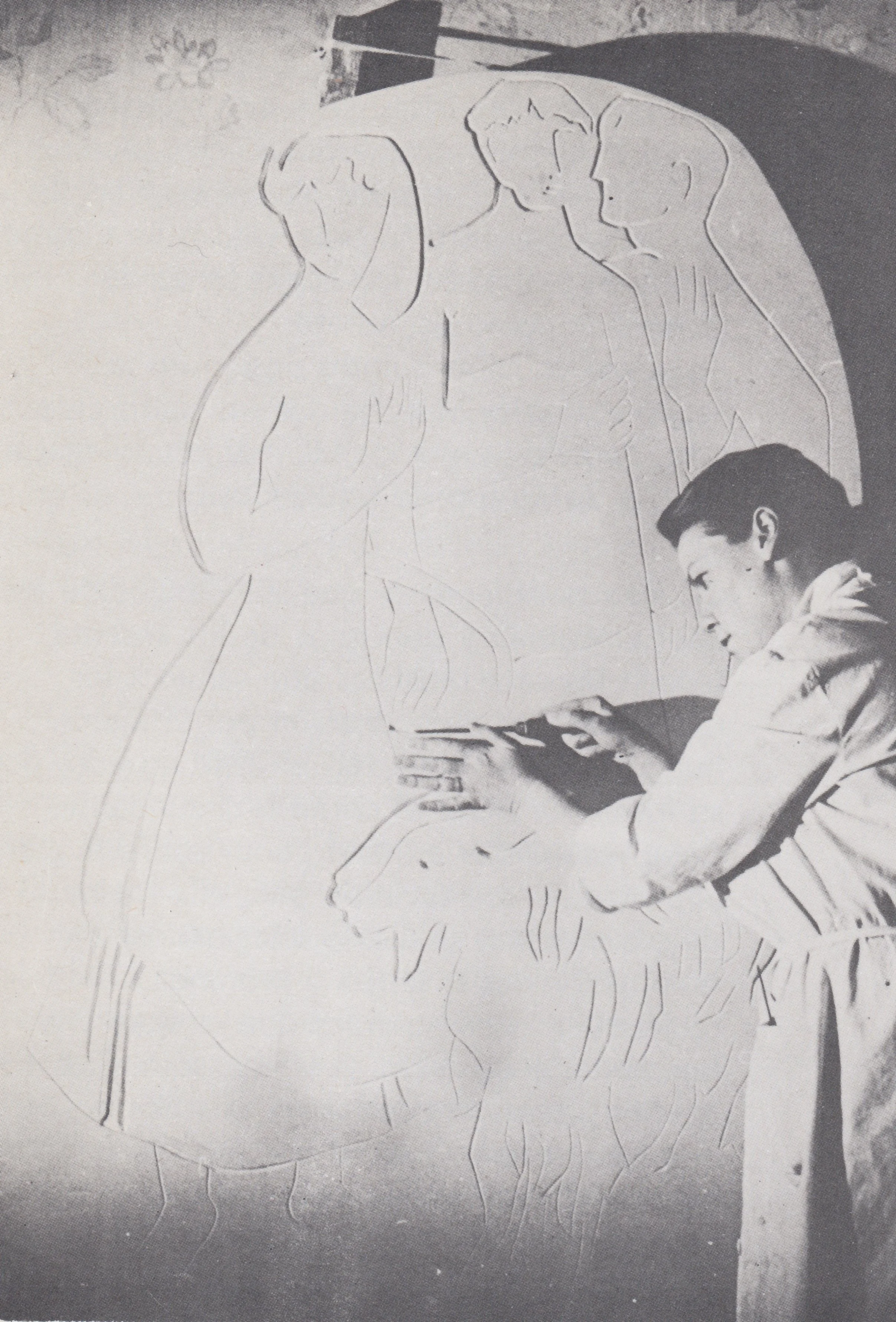
Anastasia Grieg in Nice, 1952
All images are from 'Anastasia Grieg: Los Ojos de una Vida' (1988) © John GriegWords: Alexia MarmaraWith immeasurable thanks to Rebecca Fletcher and Lars Tingelstad of the National Library of Norway