About Ruins, Untouched Altars and Other Ways to Control Time
by Jennifer Lazcano
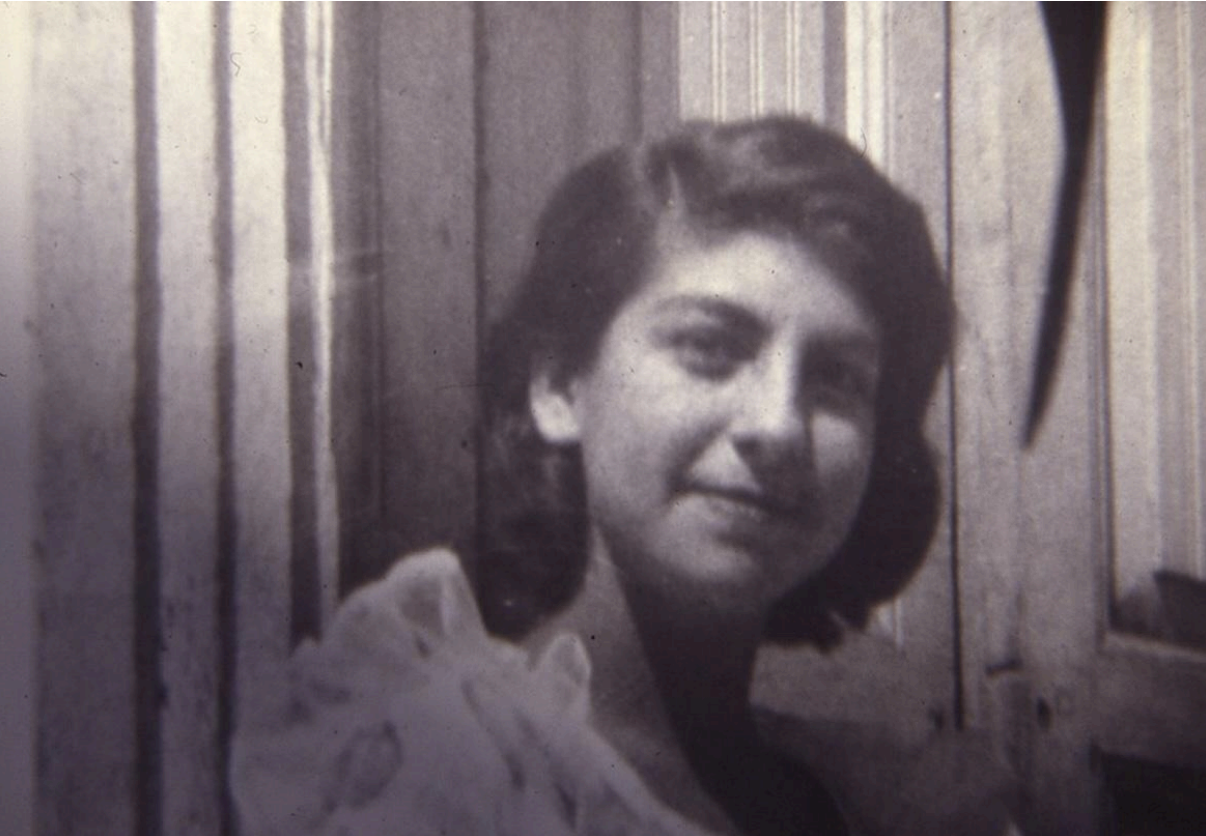
My grandma passed away one month before I was born. I only knew her through what my father told me, every night I would ask him to share a story from his childhood. I always felt a connection to his past, and when my father died, I thought I would never hear those stories again. It felt like losing a ghost you would never hear from again. But a few months ago, I found a small box filled with things that mattered deeply to my grandma: photographs, a passport, address books, keys (she collected tiny keys) and inside it, a diary written for my father.
From the diary of my grandmother, translated from Spanish:

I chose this passage of the diary because I have always been drawn to the Paricutín volcano, the only volcano in the world documented from the very moment of its birth. The little town always gave me a feeling of stillness. As a child there was no noise, it smelled of anafre, and there was a sense of being beautifully forgotten, legends of voices singing inside the church buried in lava, horses, volcanic stone, ruins, an untouched altar, and the Señor de los Milagros. These are my grandmother's memories from when she was twenty-six years old and witnessed the birth of a volcano.
From the volcano we had our years before; great tremors would come as a consequence of the volcano, they were quite strong. Still, when the volcano burst, it began with explosions like cannon blasts, and the glow could be seen as far as Uruapan, and the earth would rumble with each explosion. This began on February 8, 1943, a tremor of considerable magnitude followed by the great tremors of the earth, and the explosions were felt at every moment in Uruapan as well, and they were very loud crashes, the whole earth would just resound.
After the lava began, the burning stones, sand, etc., they began to evacuate not only Paricutín but also San Juan (which they called "de las Colchas"), they were forced to change places, to evacuate the town, something they did not want, because they had their dead there in the cemetery, and above all they did not want to move to another town with the Holy Christ because they felt it belonged to them. But El General ordered them to leave, and your father helped in those changes, carrying the wood from the huts to San Juan Nuevo, which was called Los Conejos, where they were given land for their new town.
There were many difficulties for the move, since the people of San Juan did not want to leave the Christ in any town, as they had to spend some nights or days passing through towns along the way.
Then days or time passed, I cannot say how much, and your grandfather Jesús was still alive, and he wanted to go at night, as everyone did, to watch the spectacle of the stones and lava bursting from the volcano. At night it was impressive, from a distance of several kilometers, seated for hours on a hillside, and every moment it would erupt with a loud crash like a cannon blast, and a great rain of enormous burning rocks, sand, and lava would be hurled out with force by the volcano. In the darkness of night the red of what the volcano threw out looked like fireworks, but in an impressive quantity and density, and with each blast everyone's heart would leap with fright, but it was something never seen before.
Time passed and all the ash and sand came to Uruapan, and to other places too, but here it was felt most strongly. It brought great sadness and desolation, for it lasted quite a long time and the people were sorrowful. For some years, nine years, the sand kept coming and covering the sun, so that the ash clouds always hung above and the sky was always overcast, like when it is about to rain hard, without sun. It was a sad and grieving city. Many people sold their homes and left Uruapan; the rest of us endured these things with patience and the will of God.
Until one special day came. It was five in the afternoon and suddenly it went completely dark, like a moonless night. It began with great gusts of sand, and I had Alejandro and Jesus at the kindergarten. I had a girl working for me and I quickly sent her for the children because I was frightened, but she had barely reached the corner when everything went dark, and I no longer knew whether she made it to the school or not, she never came back and never reached the children. But it was not only the darkness; a loud and strange noise began, striking wherever it pleased against the houses, and water began to flood the courtyard from above and started seeping into the rooms, and I was very frightened, because I thought it was the end of the world, and above all because my twochildren were in different places and I did not know if they had managed to leave the school or were out in the street. You could hear children crying in the street and people shouting, praying, andkneeling on the ground. I had been left alone with only Raquel, your sister, who must have been a year old or less, and Humberto, not yet three. I held a crucifix tightly in my hand and prayed to God for those who were not with me. Your father was in Zamora, and I kept thinking: we won't even die together.
But it all passed. It lasted a few hours and then the day began to clear a little, and we realized it had been a very strong hailstorm, falling mixed in with the sand, the hailstones were enormous. Part of the walls were muddied. About fifteen of my chickens died, already grown, and they drowned; the hens were saved because part of the henhouse was covered and they climbed to the highest parts. In the end the poor people, as always, those with cardboard or tin roofs, had them collapse, and the next day trucks were needed to help remove the sand from the houses, because what had settled on the tiled roofs came down and fell into the patios. And so it always was, everything a consequence of the volcano.
Jennifer Lazcano is a Mexican [beautiful bewitching badass bitch who does a million things and has the most beautiful heart I have ever met!!]